Fukier Cellar
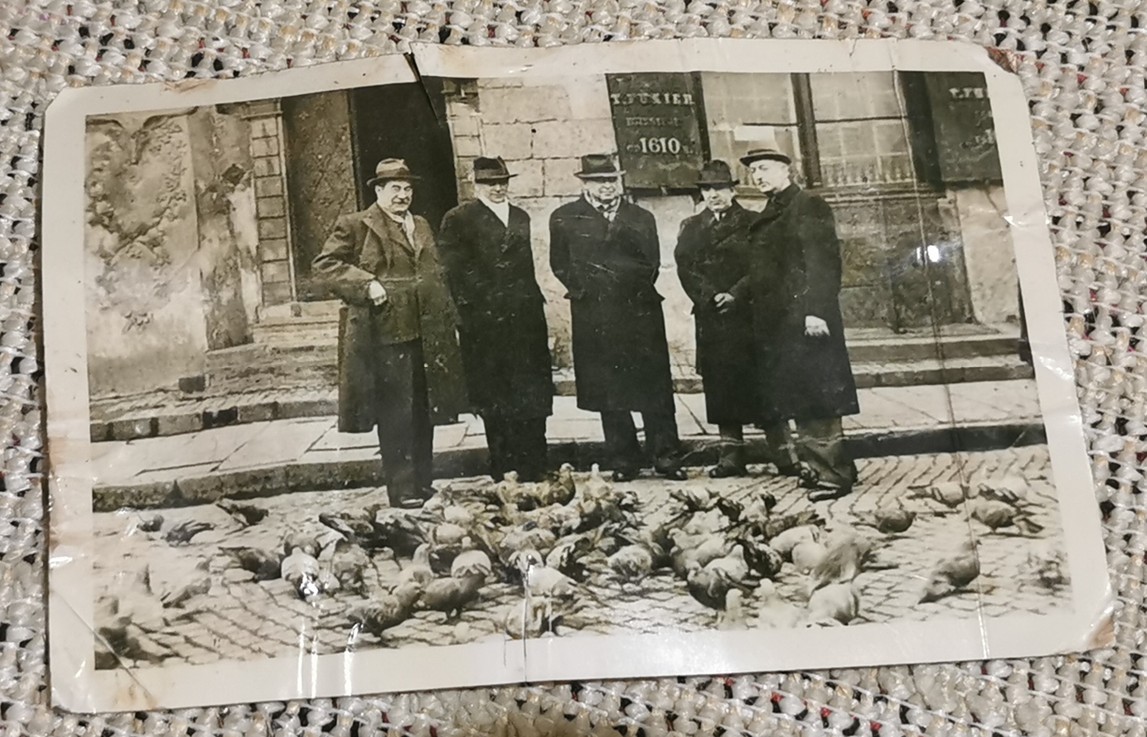
For me and many others probably the most famous of all Tokaji cellars because it had the largest collection of the oldest Tokaji vintages dating back until 1606, in total some 5.500 bottles. The collection had been thought to be lost during World War II until I proposed the possibility that some Fukier bottles could still exist during a presentation I held in Tokaj in 2005. This presentation sparked some interest but it took a nother 12 years until the first Fukier bottle surfaced. And I feel very privileged to have been part of this cellar discovery. But befire getting into thst let me very very briefly outline the story of the Fukier Tokaji collection.
The Beginning
The polish Fukier family is believed to be a side branch of the famous and influential Fugger dynasty from Augsburg. The first appeatrence of the Fukier name in Warsaw is from 1515. The Fukier company was founded in 1610 as a merchant house. Real fame as wine trading company and wine bar only started with Florian Fukier (1772–1837). He and his successors Teofil, Henryk and Henryk Maria managed to build and maintain the largest commercially available collection of old Tokaji wines in the world which attracted many famous guest. Legend says that even Napoleon visited the cellar in 1812 on its march to Moscow.
In 1927 the Fukier company went bankrupt (under Henryk Maria Fukier), and was sold to Edward Krzemiński who also ended up in financial difficulties. According to Henryk Maria Fukier the wines were confiscated in World War II by the Wehrmacht from 6-8 October 1939. The building got destroyed during the war but was rebuilt and today houses the well-known restaurant "U Fukiera". The last Fukier, Henryk Maria, died in 1959 without children, his autobiography is a very valuable source of information.
The history and legacy of Fukier story has been researched by Gabriel Kurczewski whose publications and website I strongly recommend. For this matter I can focus here on the Tokaji collection.
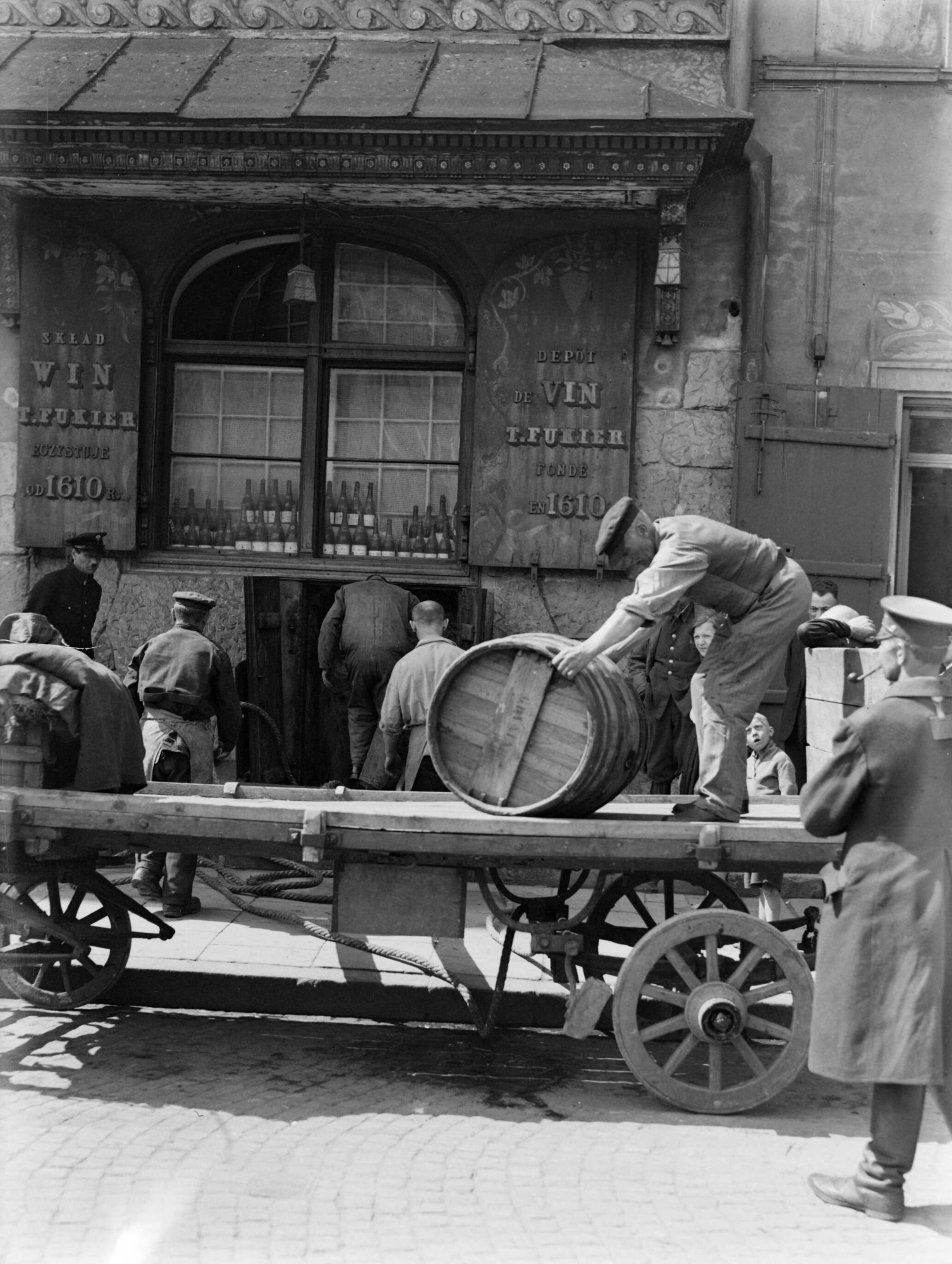
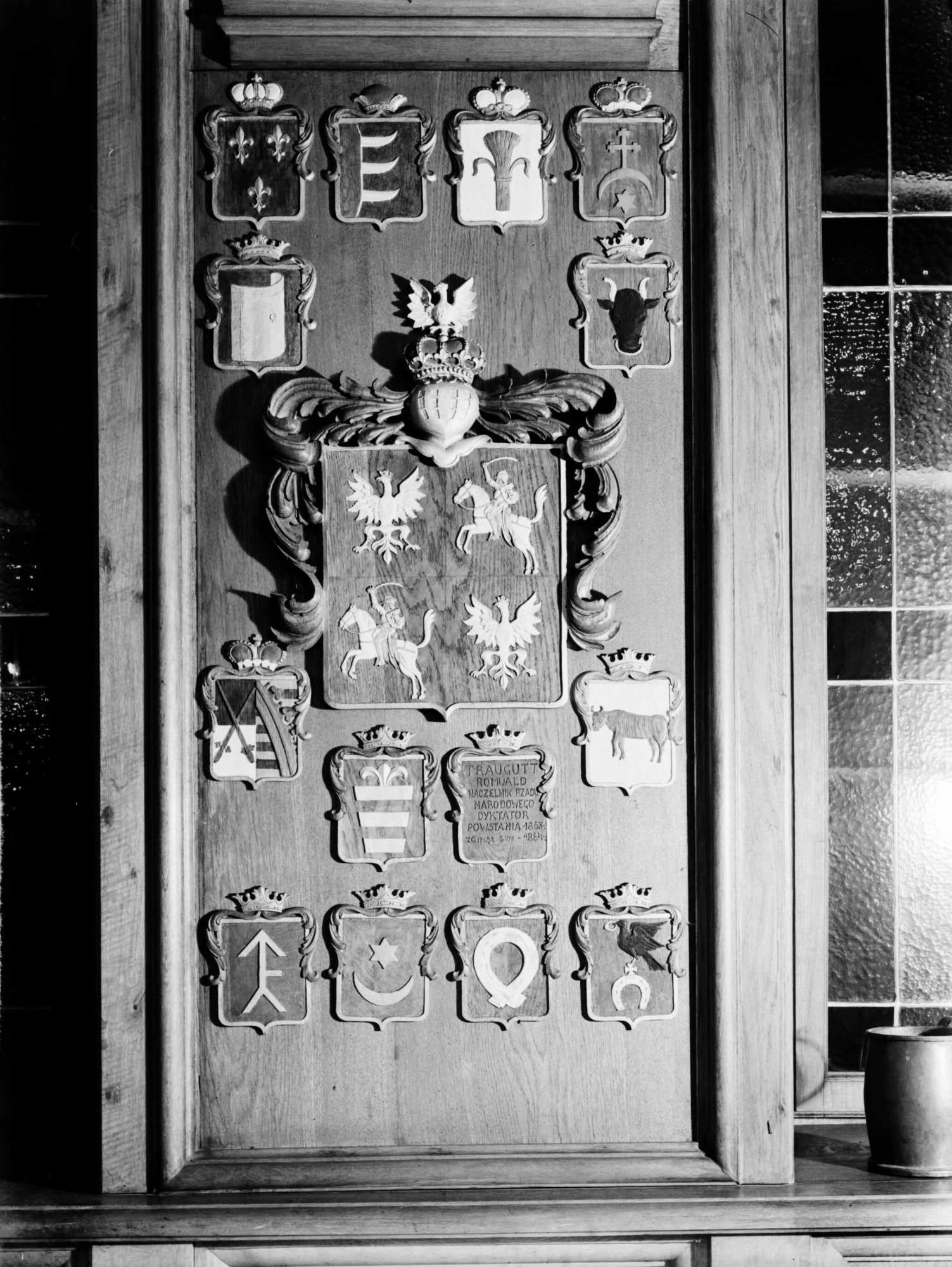
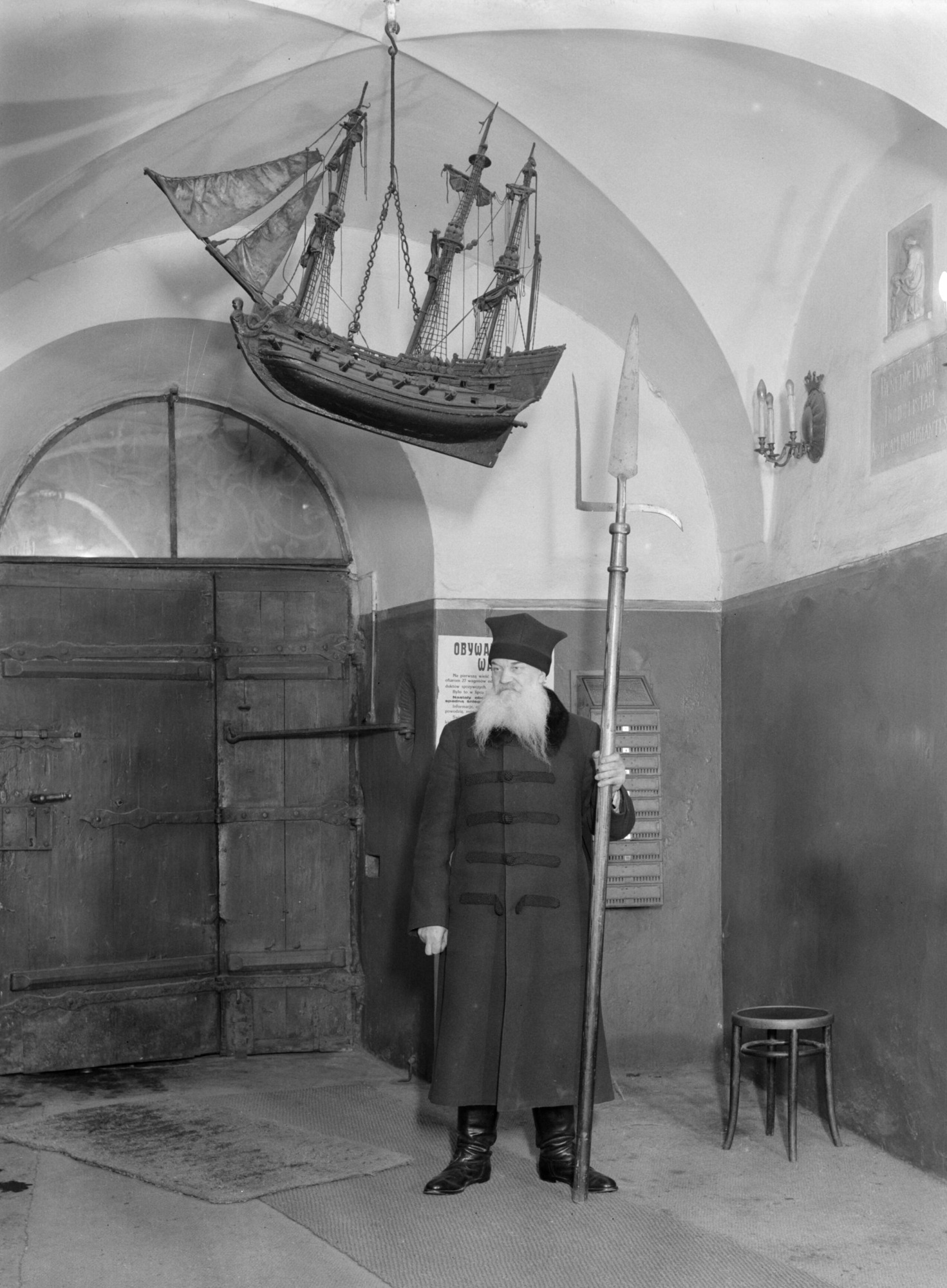
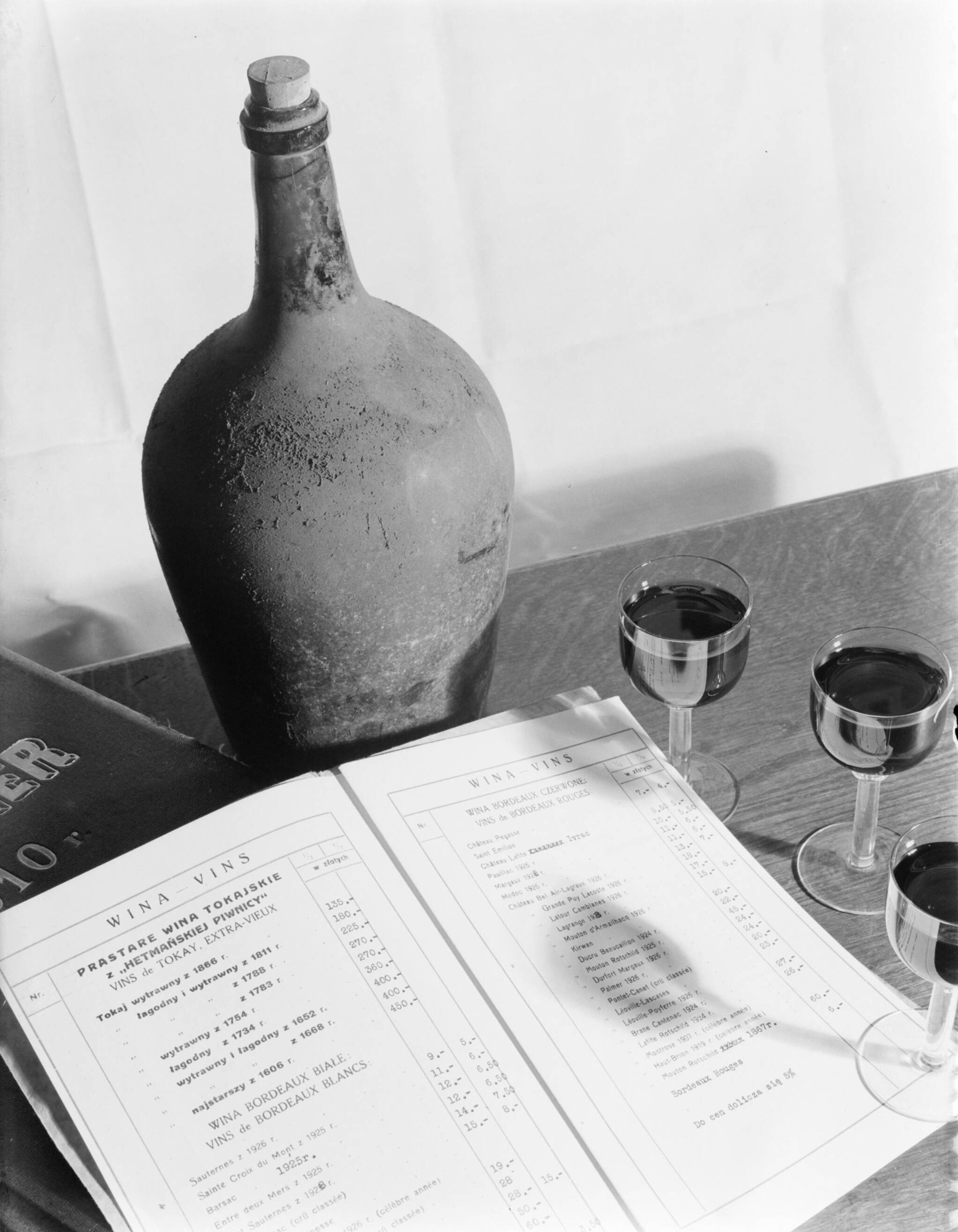
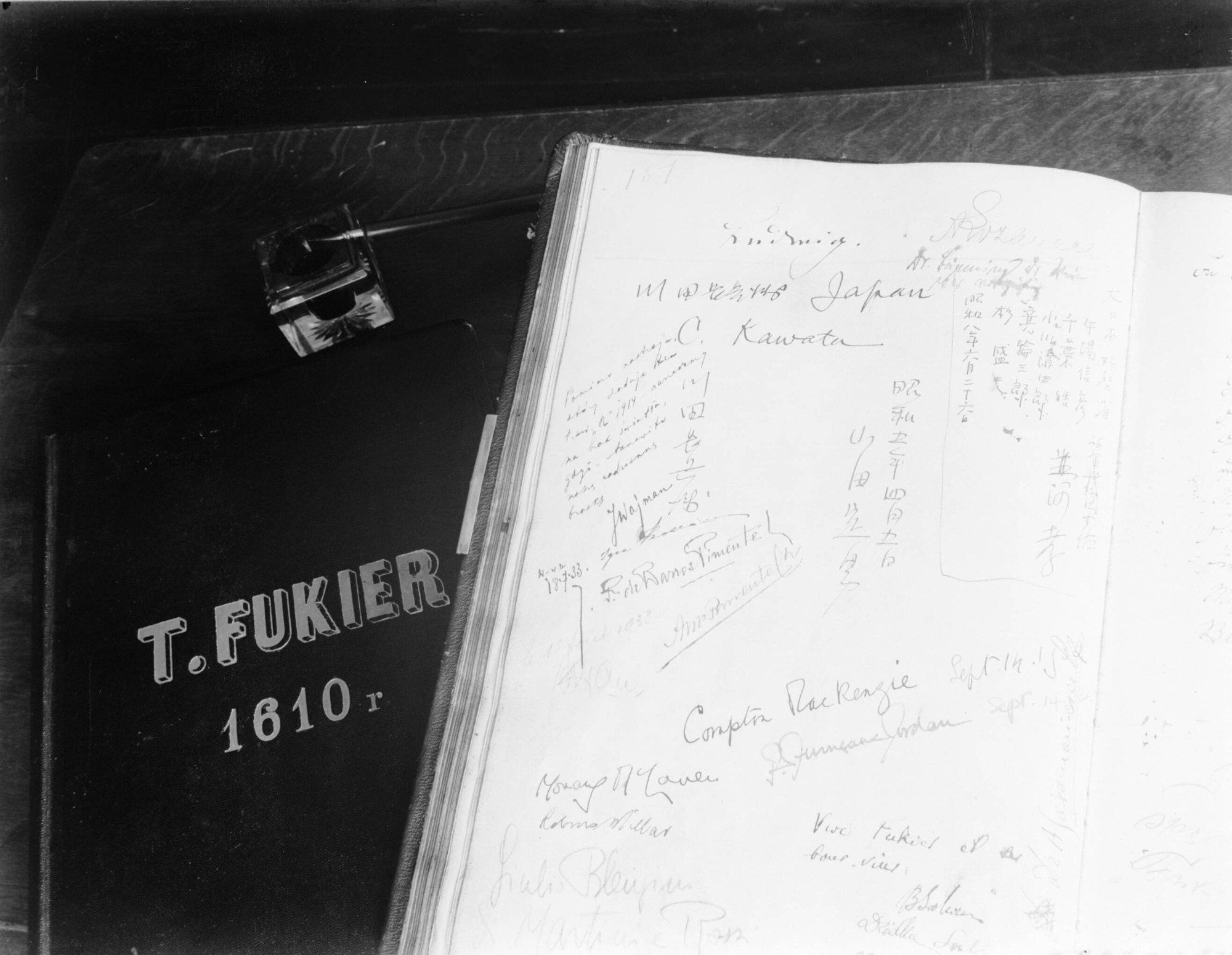
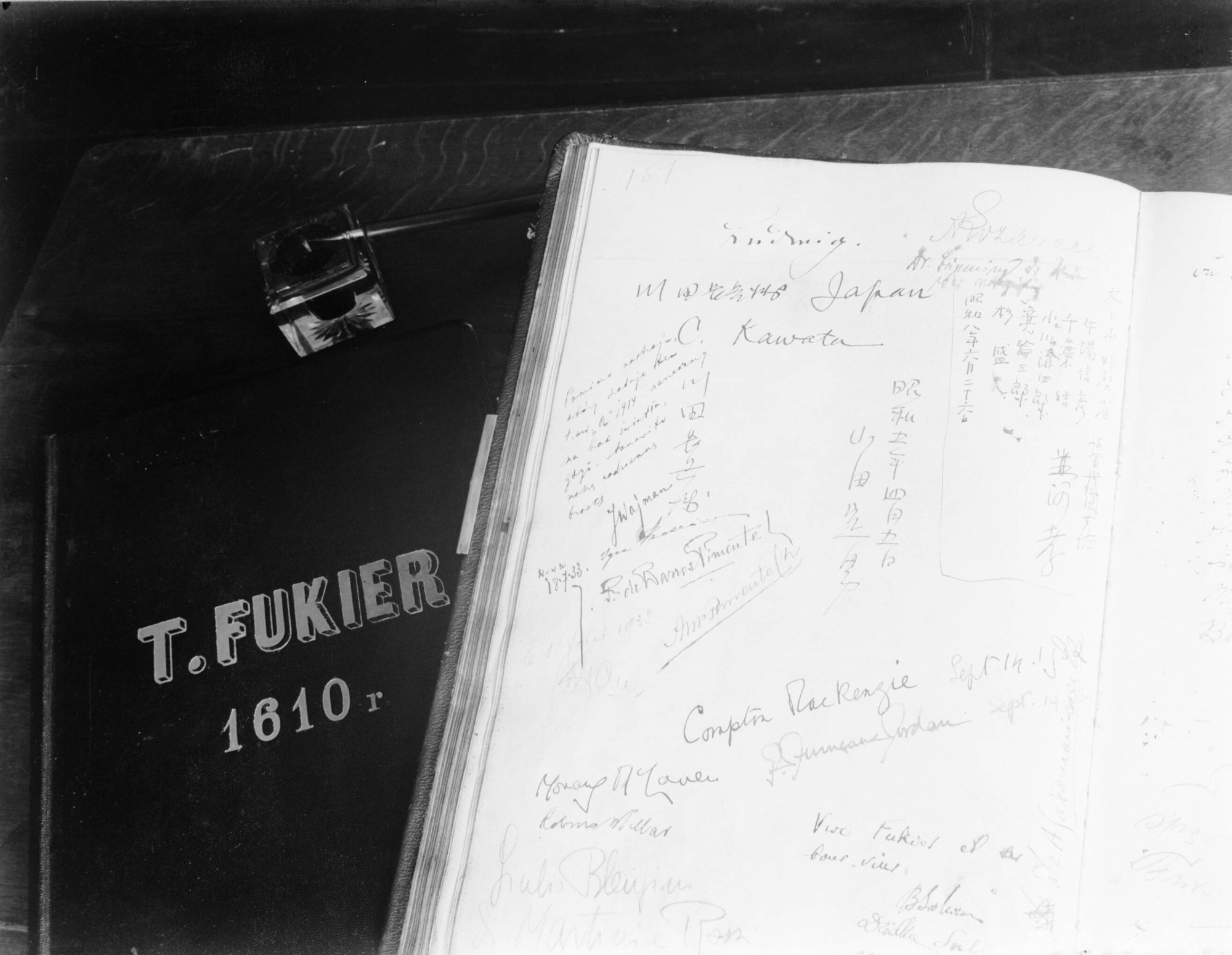
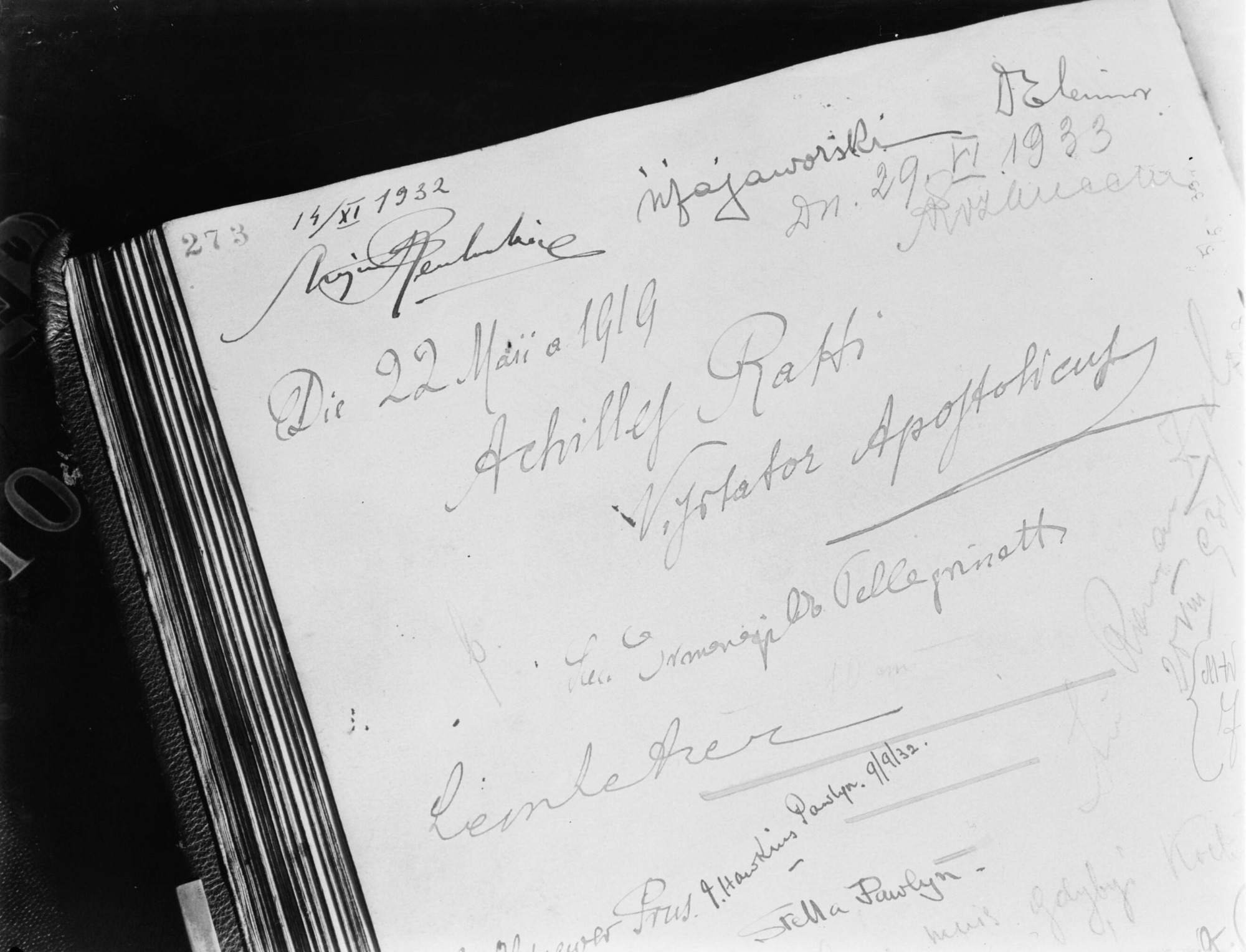
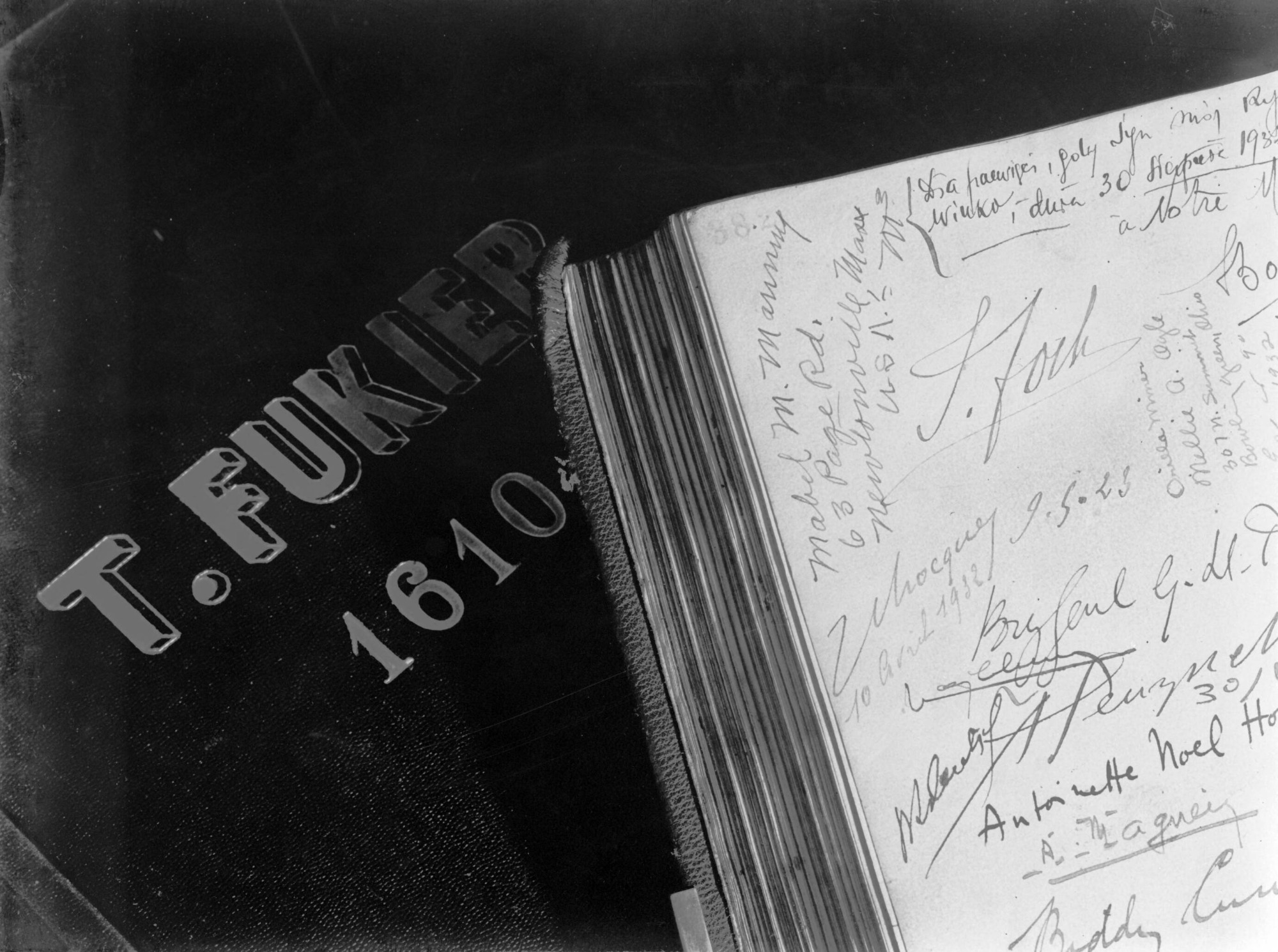
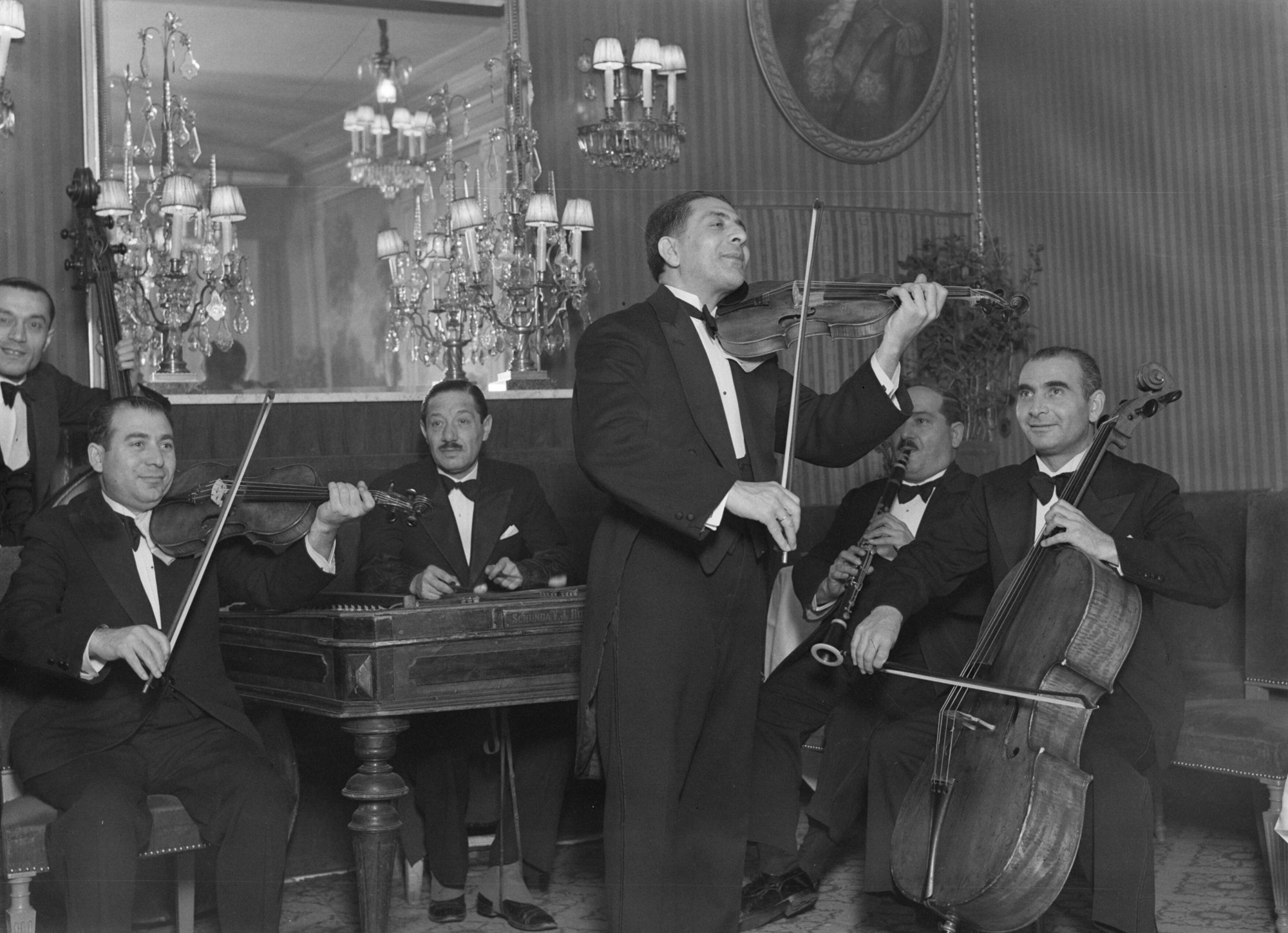
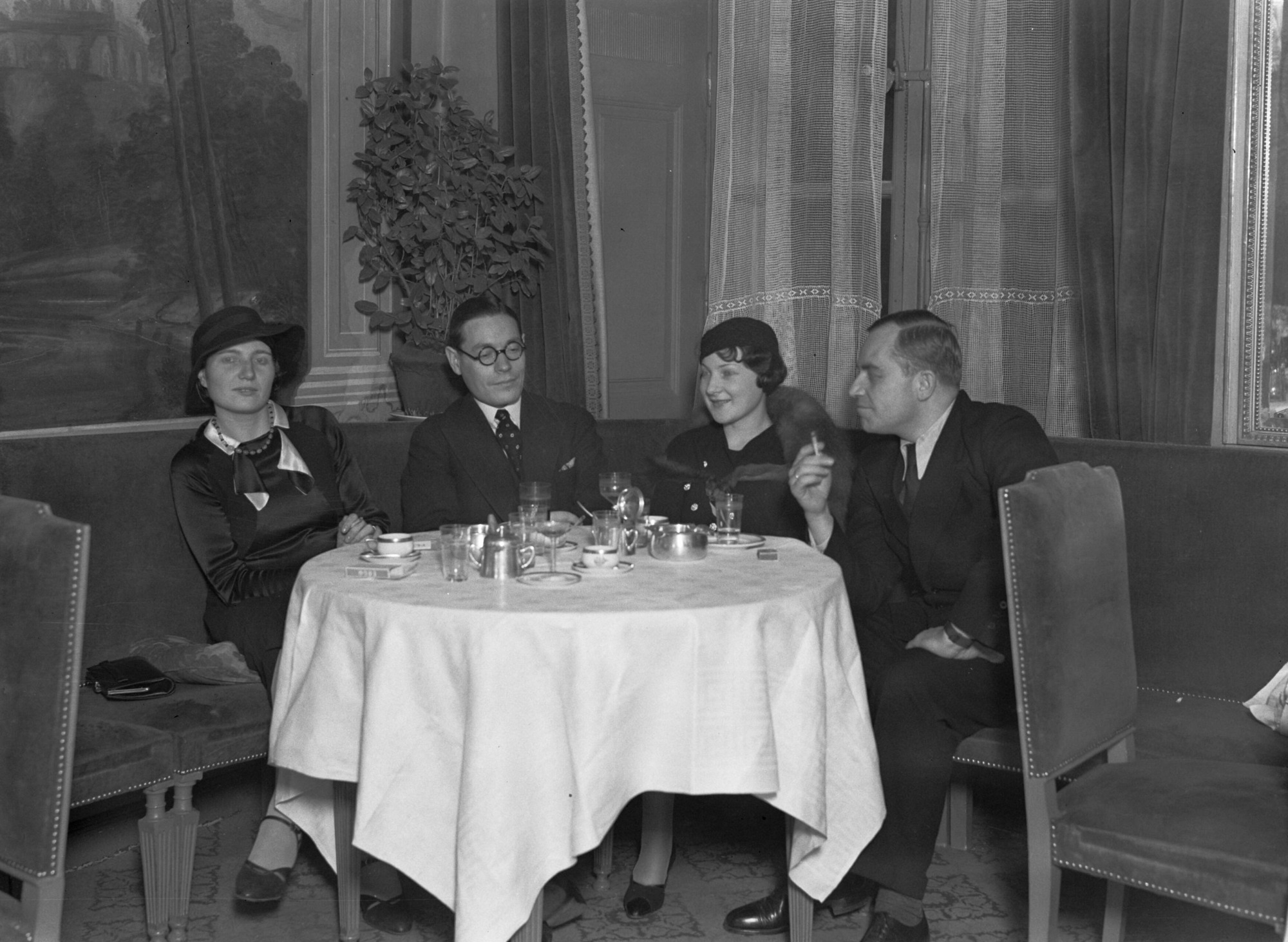
Impessions from the Fukier Cellar in 1934 from Dutch photographer Willem van de Poll.
The description of the first of the 4 guestbook photos reads "Guestbook of winery Fukier, with a contribution from King Ludwig of Bavaria". Indeed there is the word "Ludwig" at the top, but historians did not confirm any trasvel from King Ludwig I. to Poland.
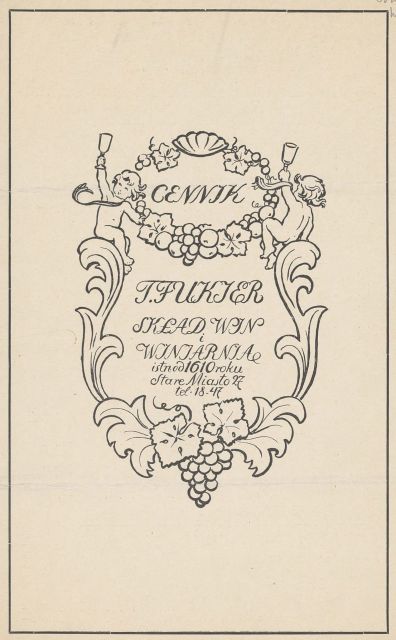
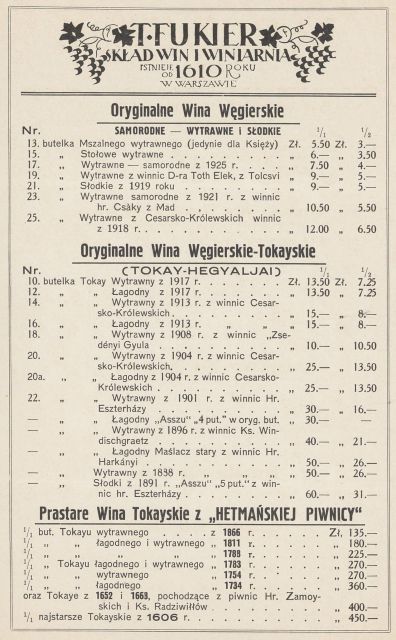
Please not the price list details: The most expensive wine is a Tokaji 1606 for 450 Zloty, followed by 1652 and 1668, both for 400 Zloty per bottle. On the right hand side are Bordeaux, the most expensive being a Mouton-Rothschild from 1867 (61 years old in 1934) for 60 Zloty, followed by a Brane Cantenac of 1924 (10 years old) for 27 Zloty and a Lafite Rothschild of 1924 for 26 Zloty. This makes the 1606 app. 17x more expensive than a 10 year old Premier Grand Cru.
Source: https://www.nationaalarchief.nl/onderzoeken/zoeken?activeTab=photos&rm=gallery&searchTerm=fukier
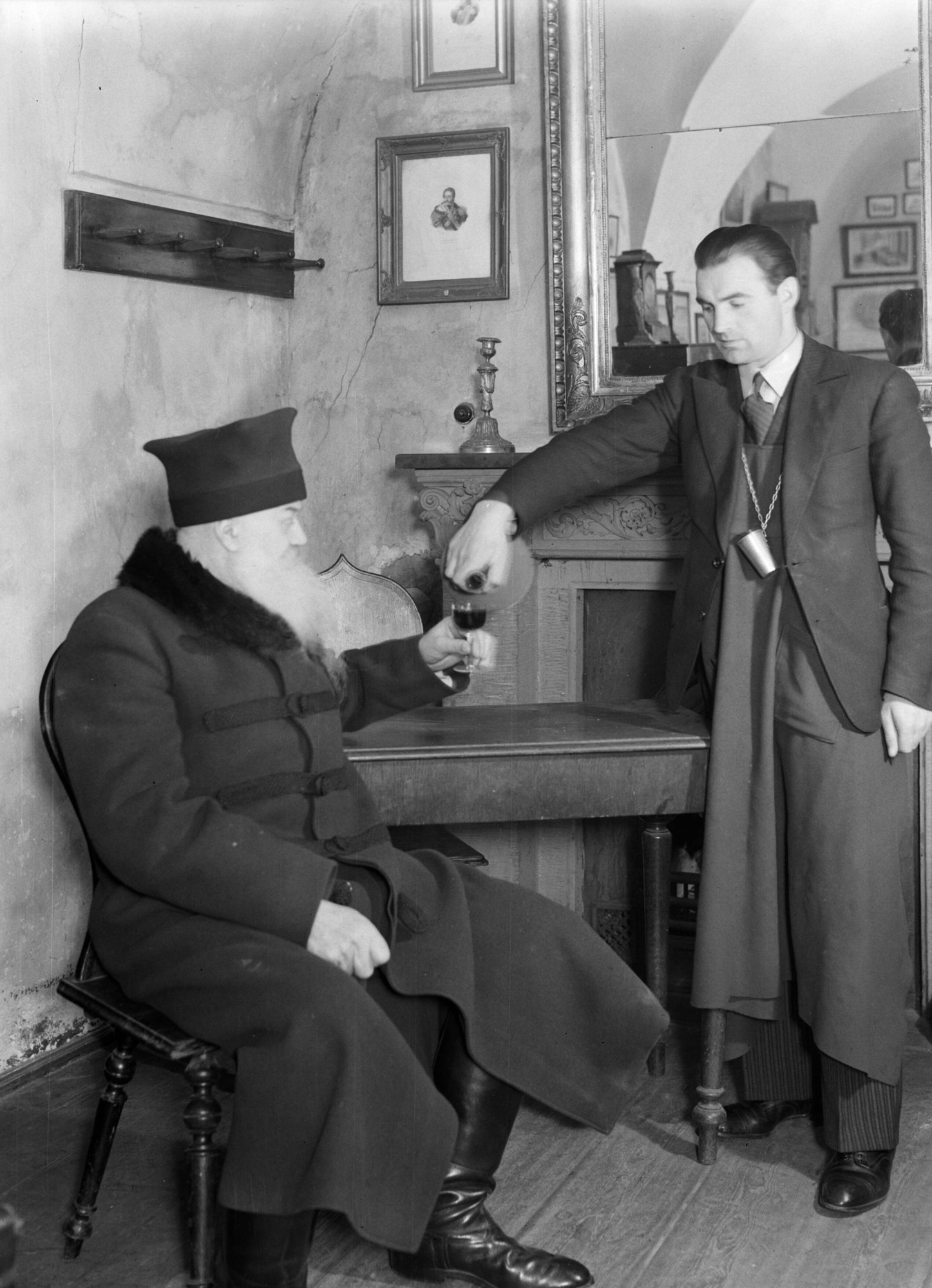
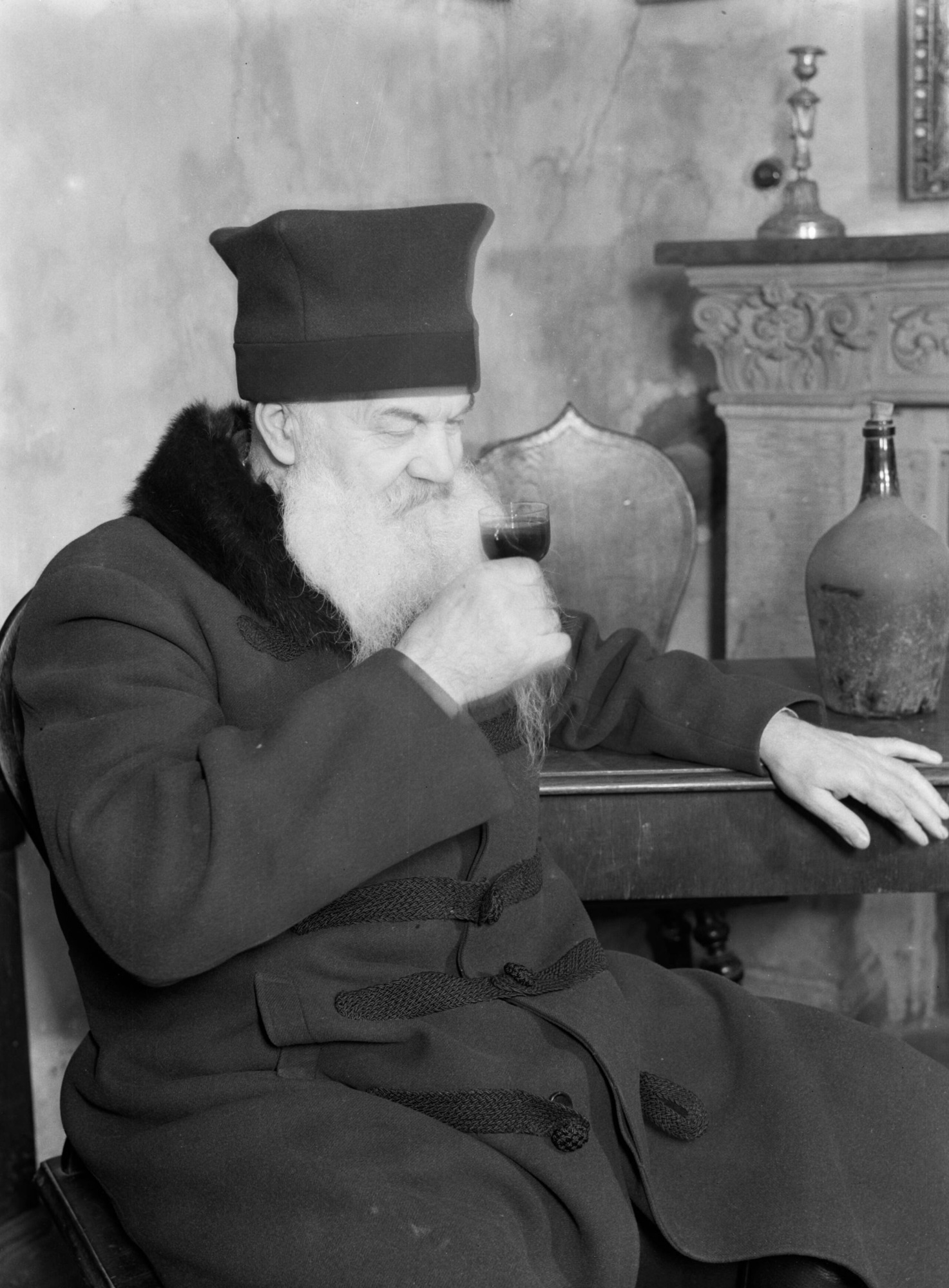
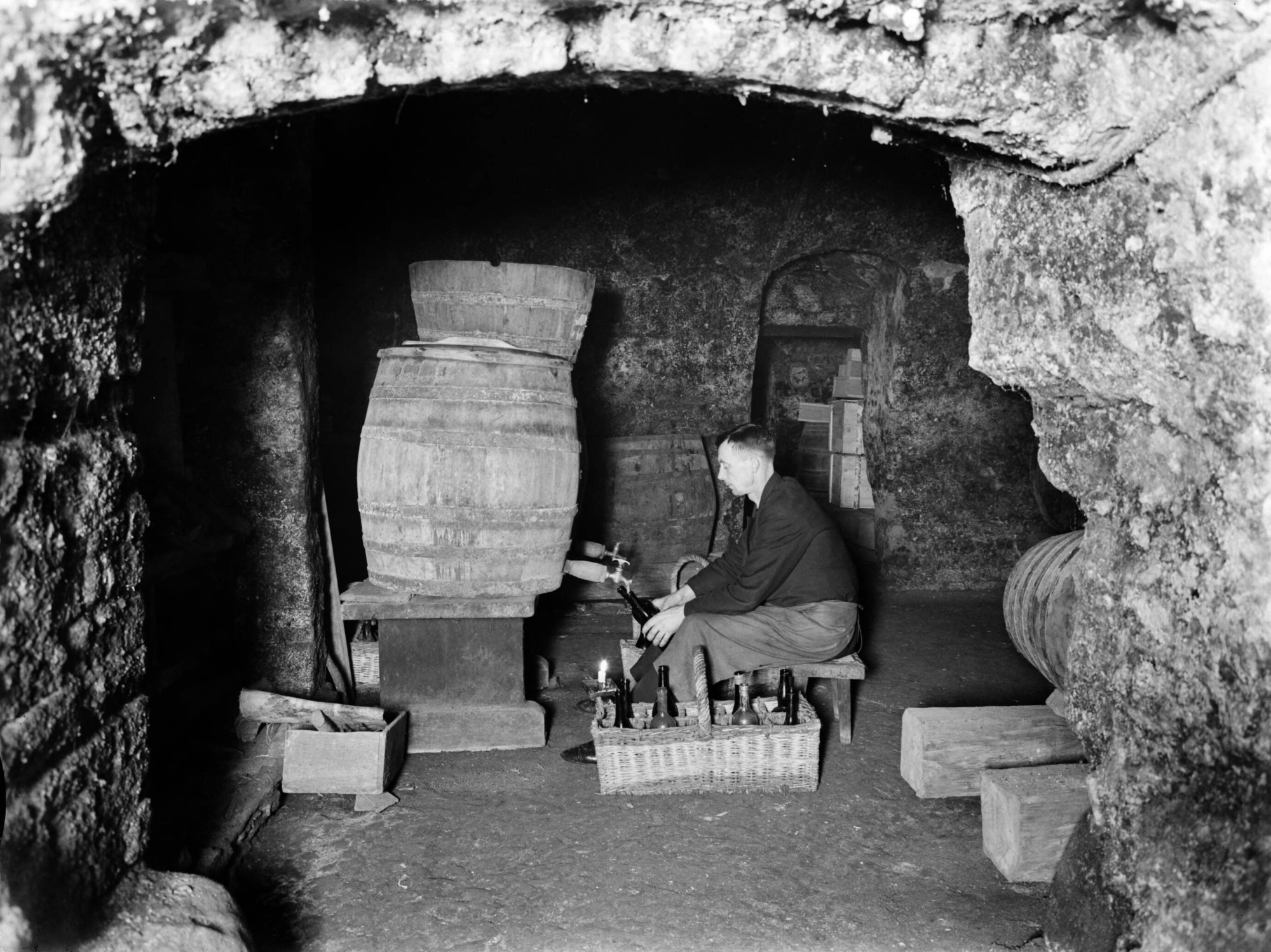
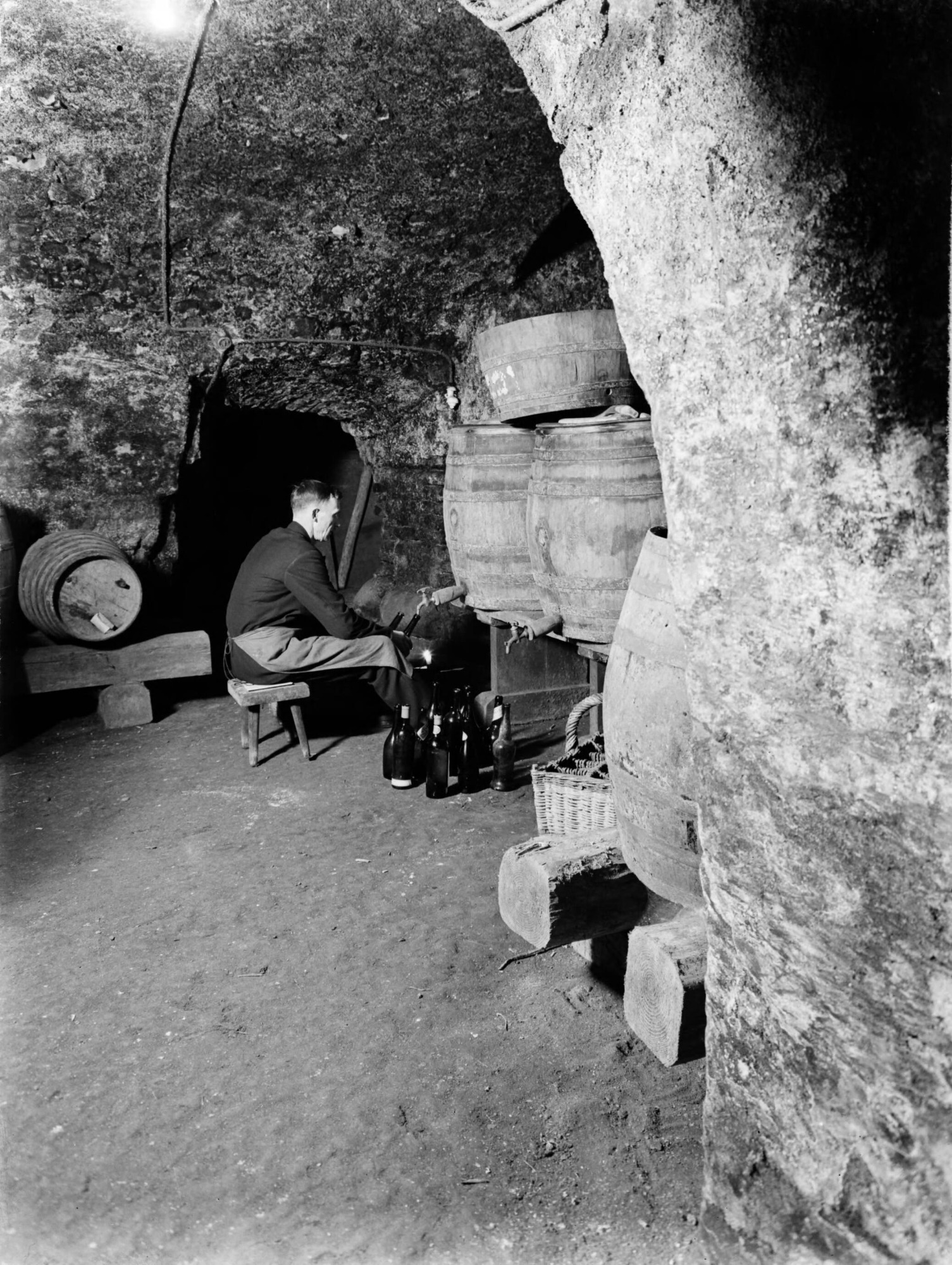
Henryk Maria Fukier in 1926
Source: https://www.szukajwarchiwach.gov.pl/en/jednostka/-/jednostka/5928613
Henryk Maria Fukier with Count Josef Sermage
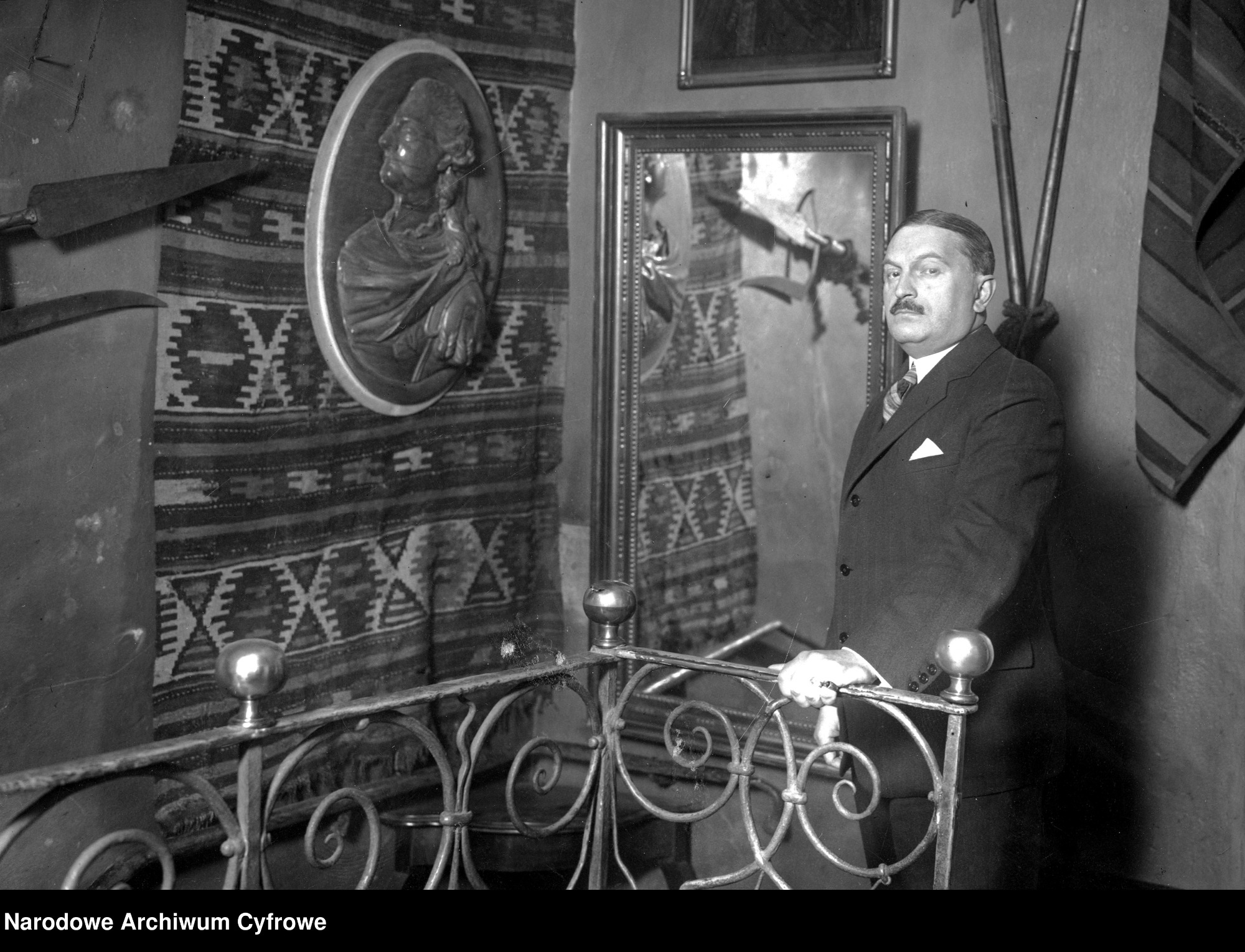
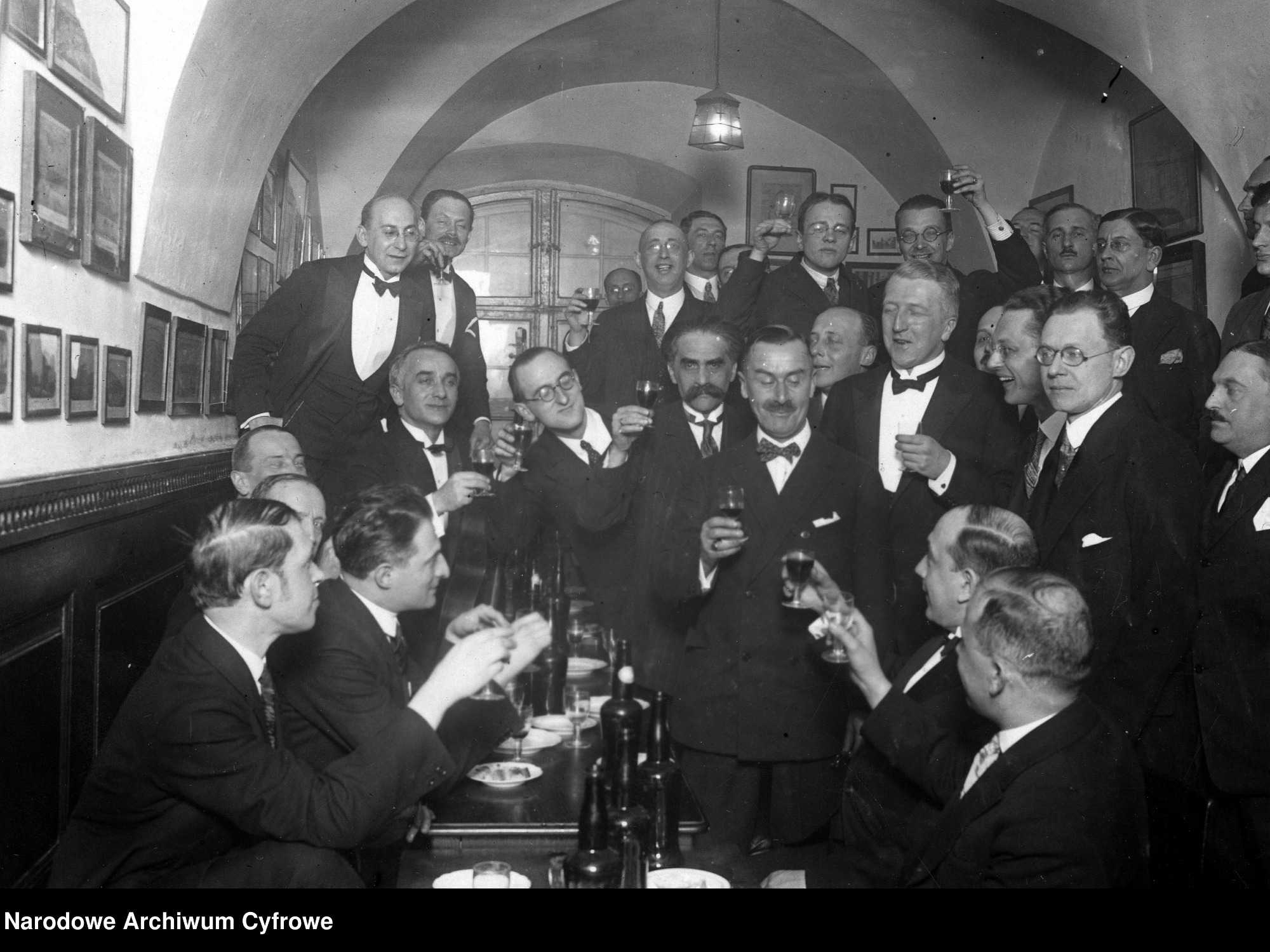
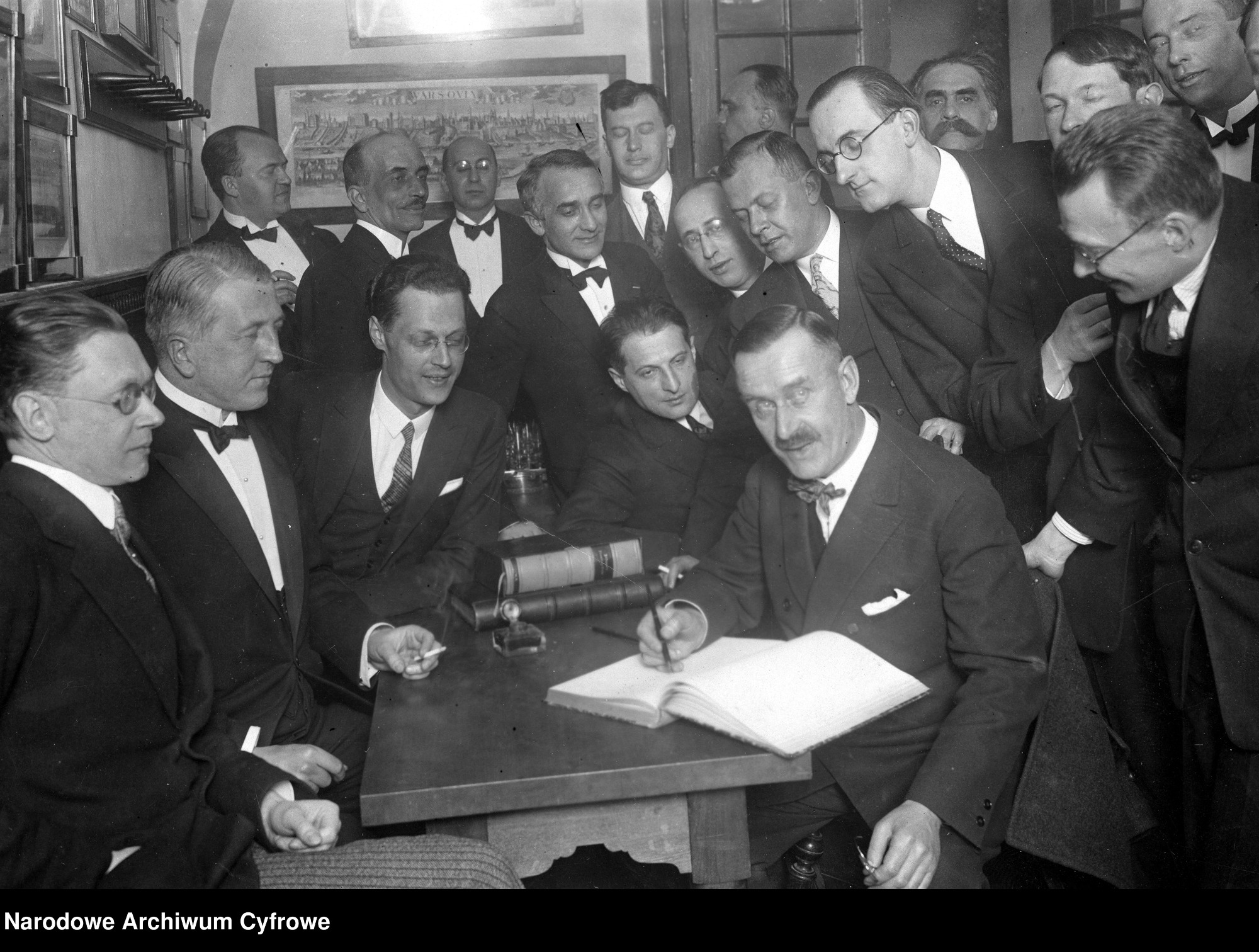
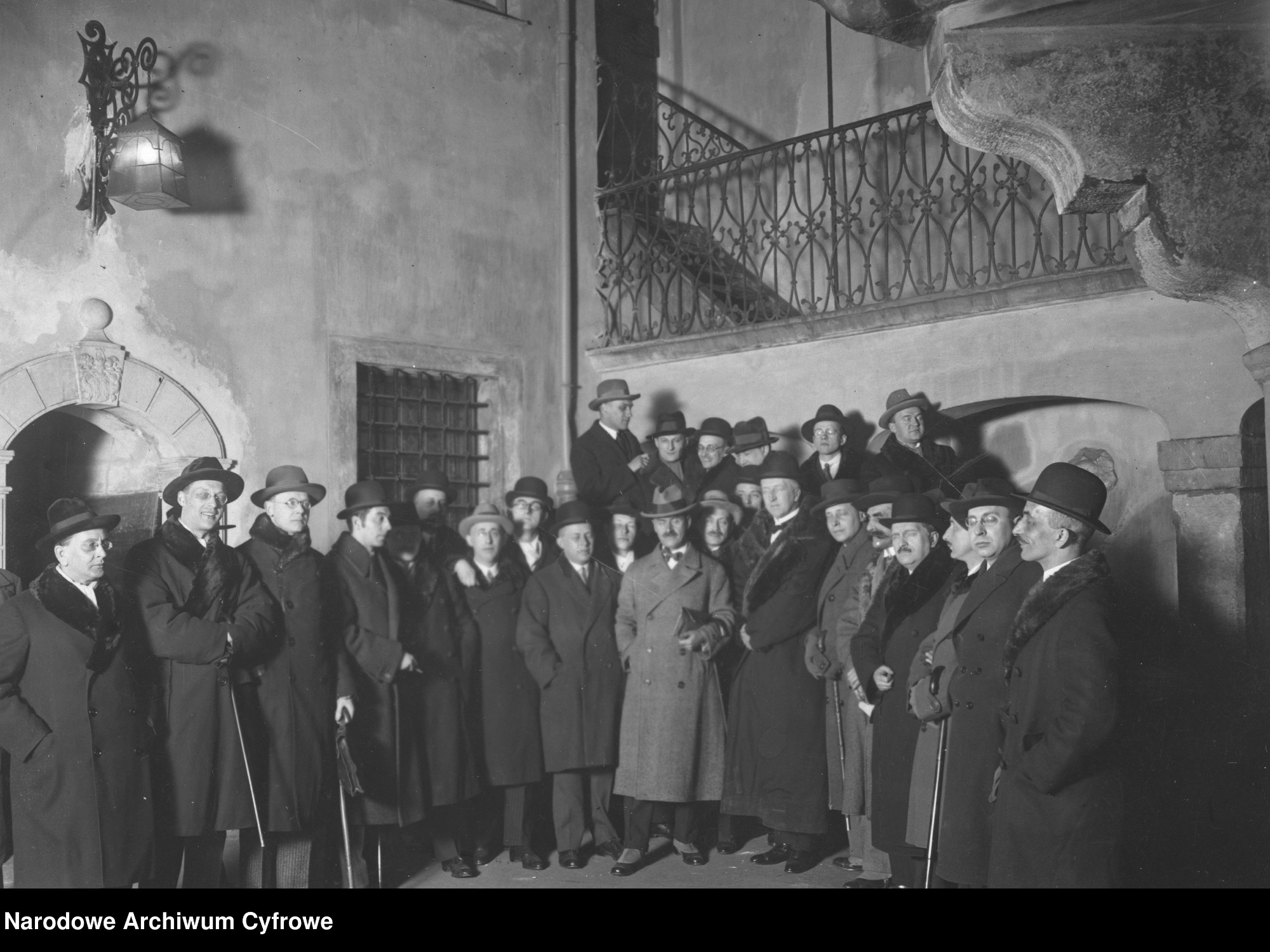
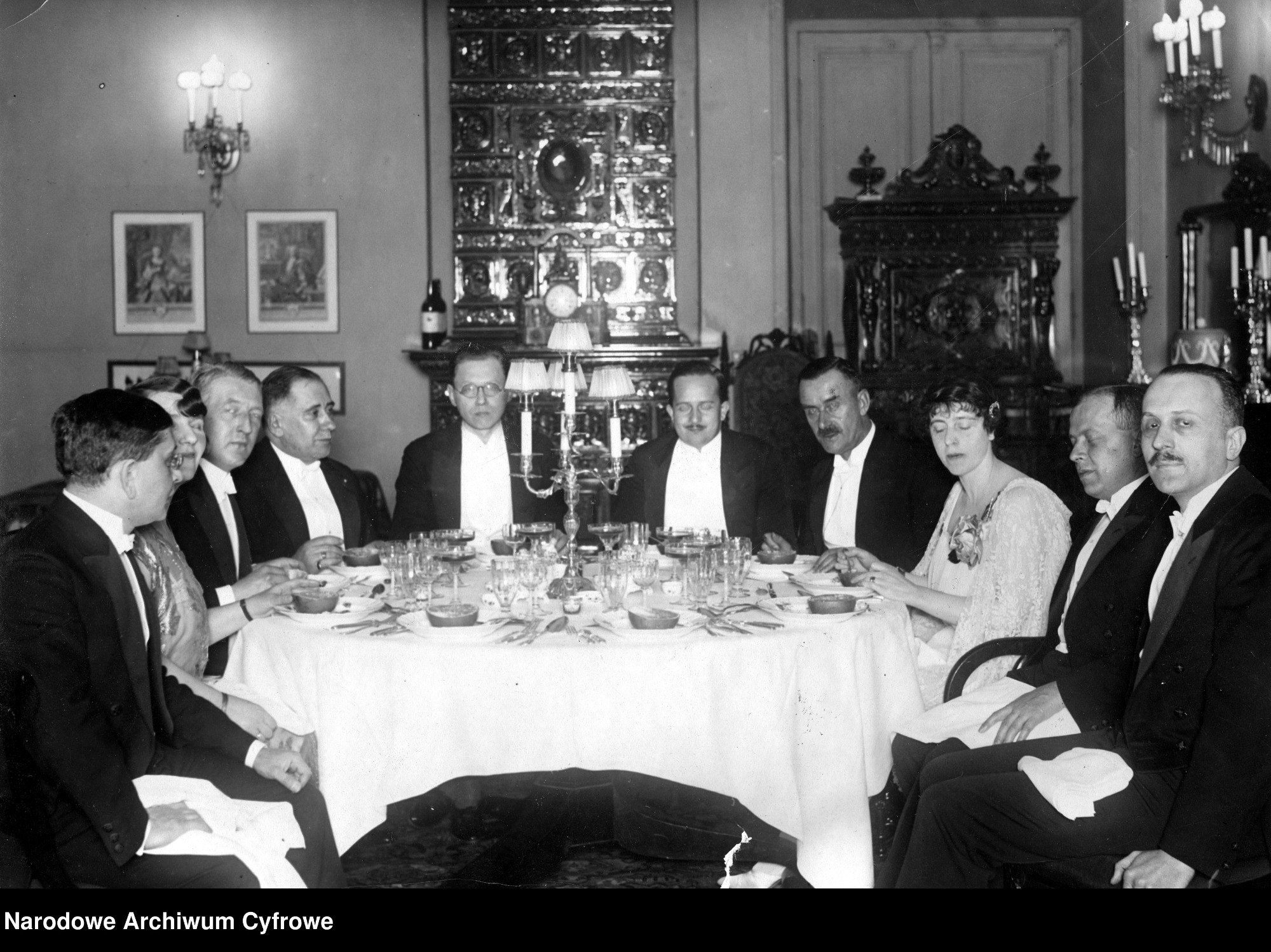
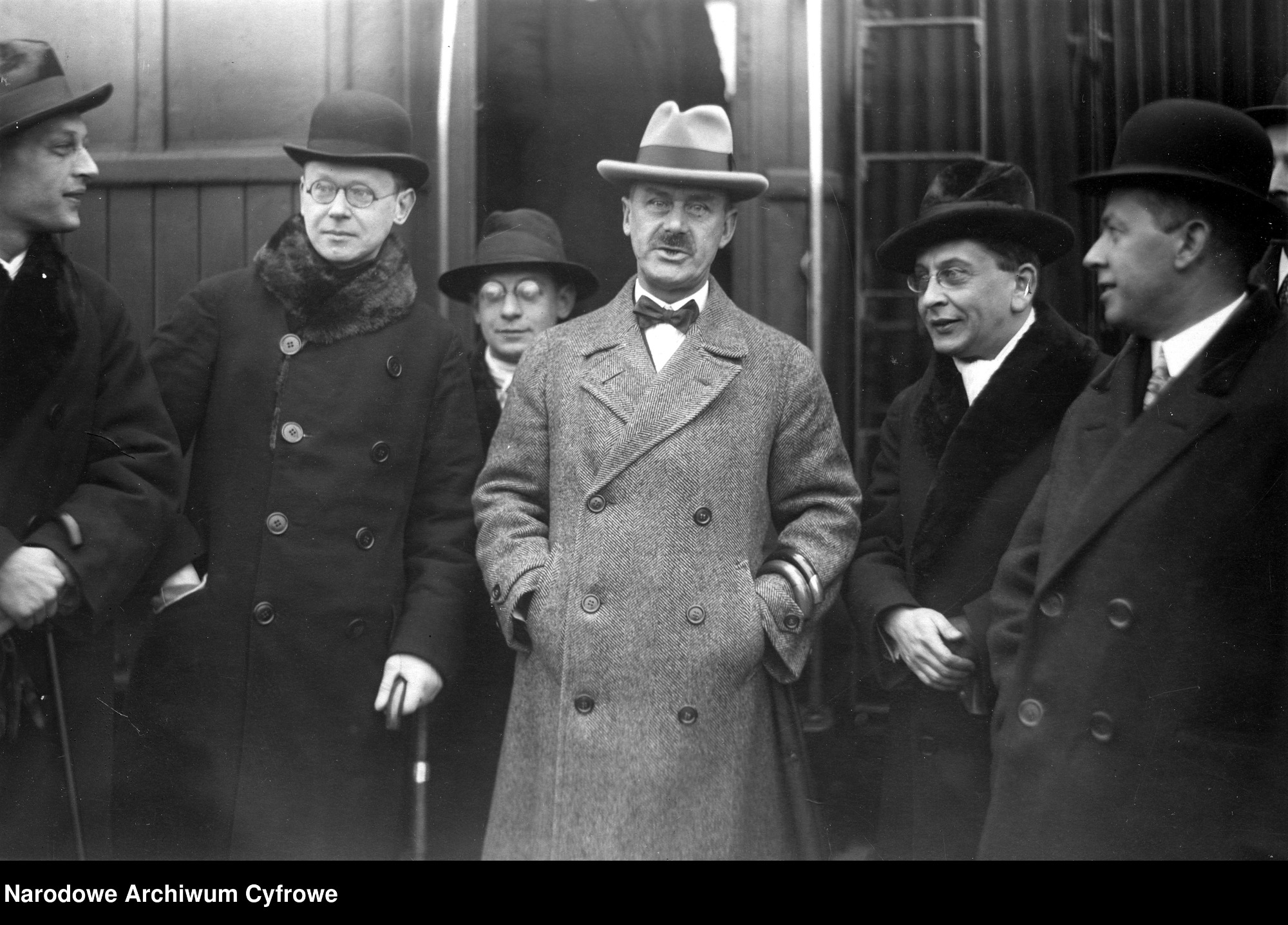
Thomas Mann in the Fukier cellar in 1927.
Source: https://www.szukajwarchiwach.gov.pl/en/jednostka/-/jednostka/5921007/obiekty/348298#opis_obiektu
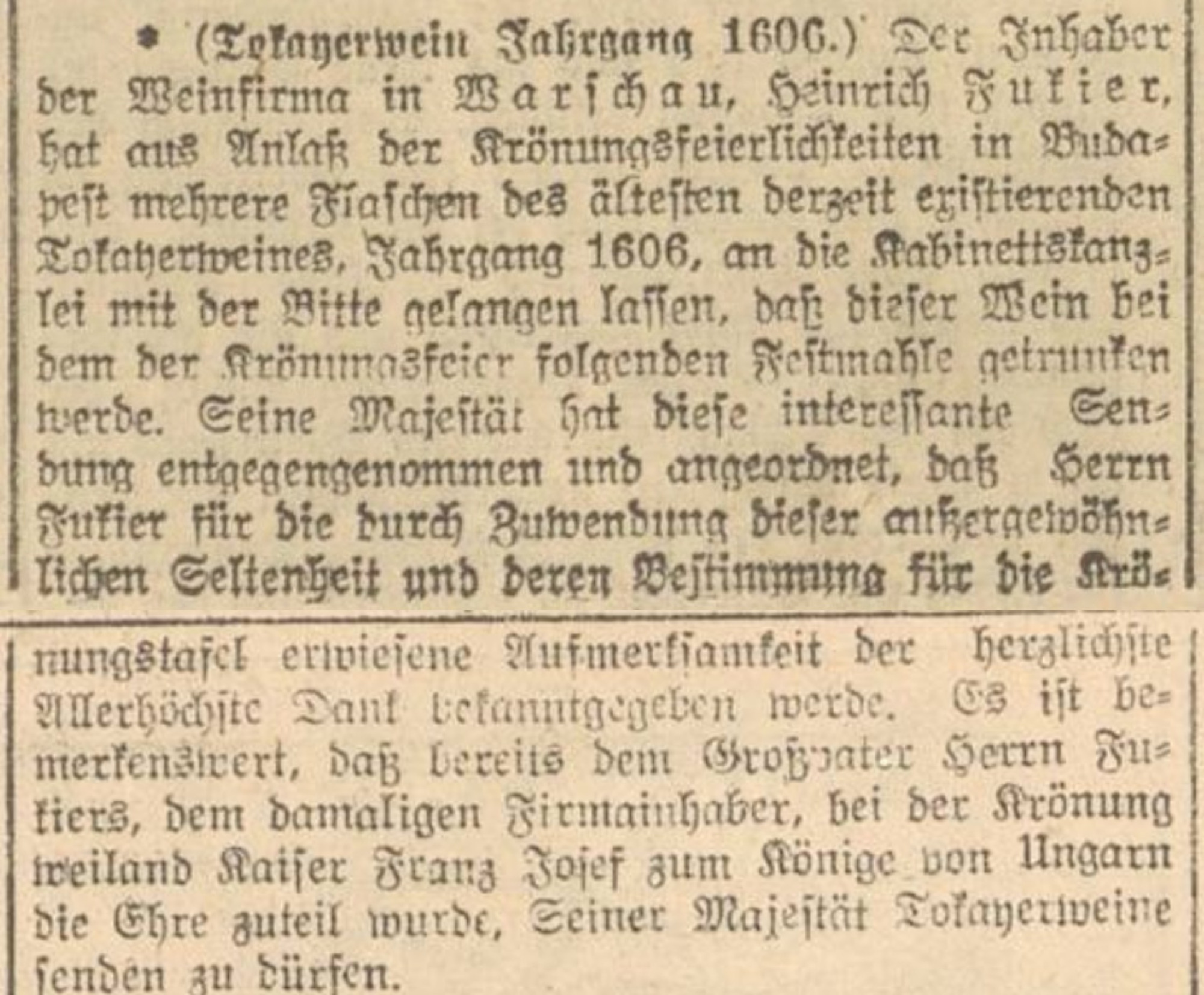
Fukier sends Tokaji of vintage 1606 to the coronation of the Hungarian King.
Source: Newspaper article in the Oesterreichische Morgenzeitung und Handelsblatt, 11 January 1917
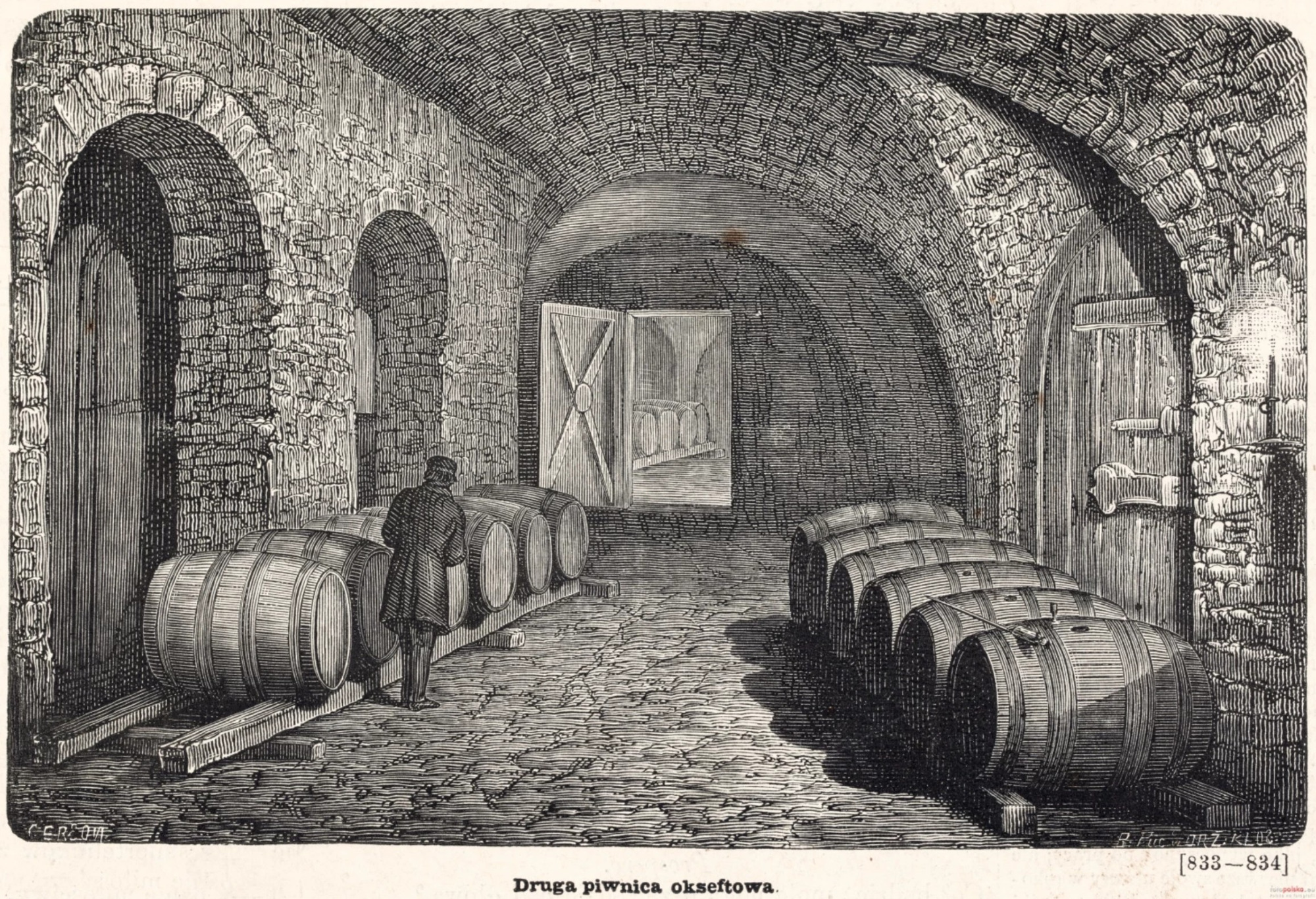
Tokaji in the Fukier Cellar
Tokaji wine was imported mostly in barrels and later filled into bottles of various sizes and shapes. This is why very old Fukier Tokaji can be found in bottles that were produced much later. According to the memoires of Henryk Fukier, the bottles were recorked every 6 years, and Fukier claimed that the secret of protecting the quality of the wine was to soak the new cork for one day in a special liquid before recorking, the composition of the liquid being a trade secret of the Fukier house. Once bottles were filled the oldest ones were marked and stored upright, as one usually does with Tokaji, in a special cellar section.
The Fukier house did not only buy Tokaji wines in barrels, but also in bottles when opportunities arose.
The Hetman Collection within the Fukier Cellar
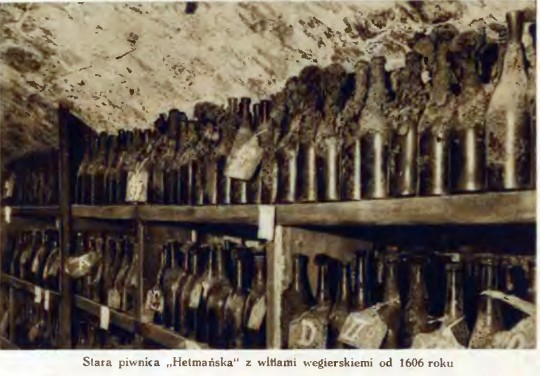
The Hetman collection was the oldest and most prestiguous part of the Fukier collection. Hetman was a title given to the highest-ranking military officers and those powerful commanders had their own valuable Tokaji collections. Gabriel Kurczewski showed convincing evidence that the origin of the Hetman collection was laid by Teofil Fukier in 1853, when 700 old Tokaji bottles (vintages 1624–1794) of Franciszek Potocki (1788–1853) were auctioned. Several ancestors of the Franciszek Potocki had been hetmans. Teofil was one of three winning bidders for the wines.
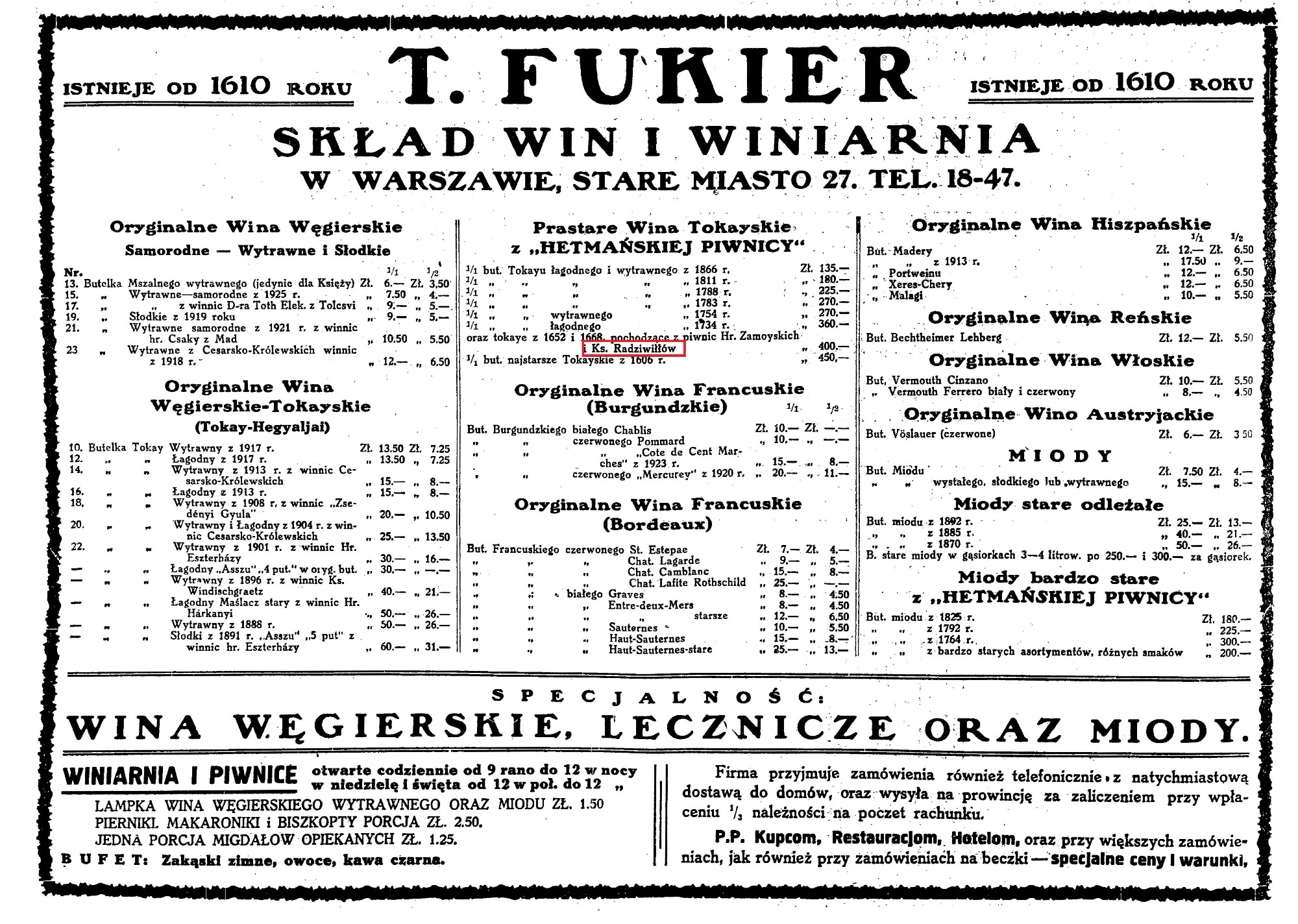
Later the Fukier house regularly bought (and probably also sold) old tokaji whenever opportunities showed up. Polish aristoctracy/nobility were among their prime sources, we know of Zamoyski, Radziwiłł, Lubomirski and Poletyłło. Also, most probably Fukier bought wines at the 1927 auction in Dresden, because a surprisingly high percentage of all known Fukier bottles arer from the Royal Saxon Royal Cellar.
Apart from historic price lists and journalists vaguely describing the cellar and vintages there is suprisingly little confirmed information available about the exact number of bottles and vintages. Cellar books and inventories have not survived. A part of the German confiscation list is known to me but I don't have publishing rights for the time being.
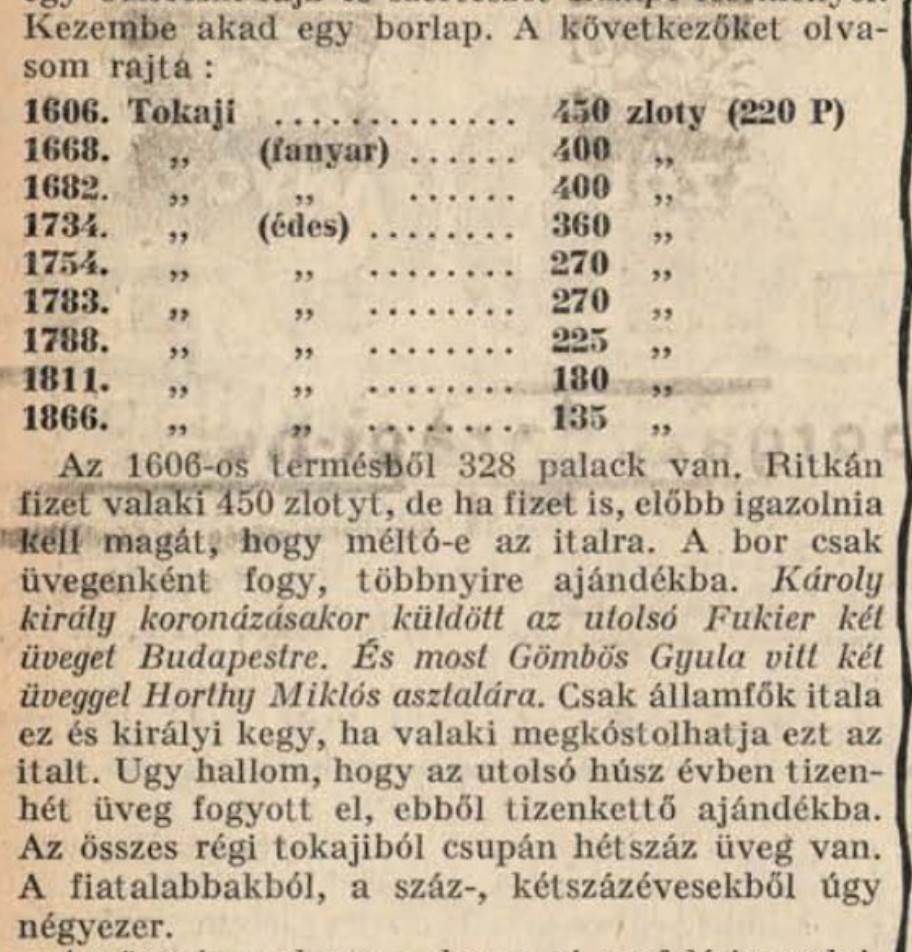
János Bókay gives some quantifications in his 1934 article. He mentions:
- 700 very old Tokaji bottles including 328 bottles of vintage 1606 (from 1914 to 1934, 12 bottles of this vintage were bought or given away as present, and 5 bottles were drunken)
- 4.000 Tokaji bottles in the age category 100 - 200 years
The Cellar Topology
We have no clear picture about the total cellar size and topology. In his 1934 article János Bókay writes about 27 cellar rooms which seems a lot. Based on all available information Gabriel Kurczewski has tried to reconstruct the cellar size, location and topology.
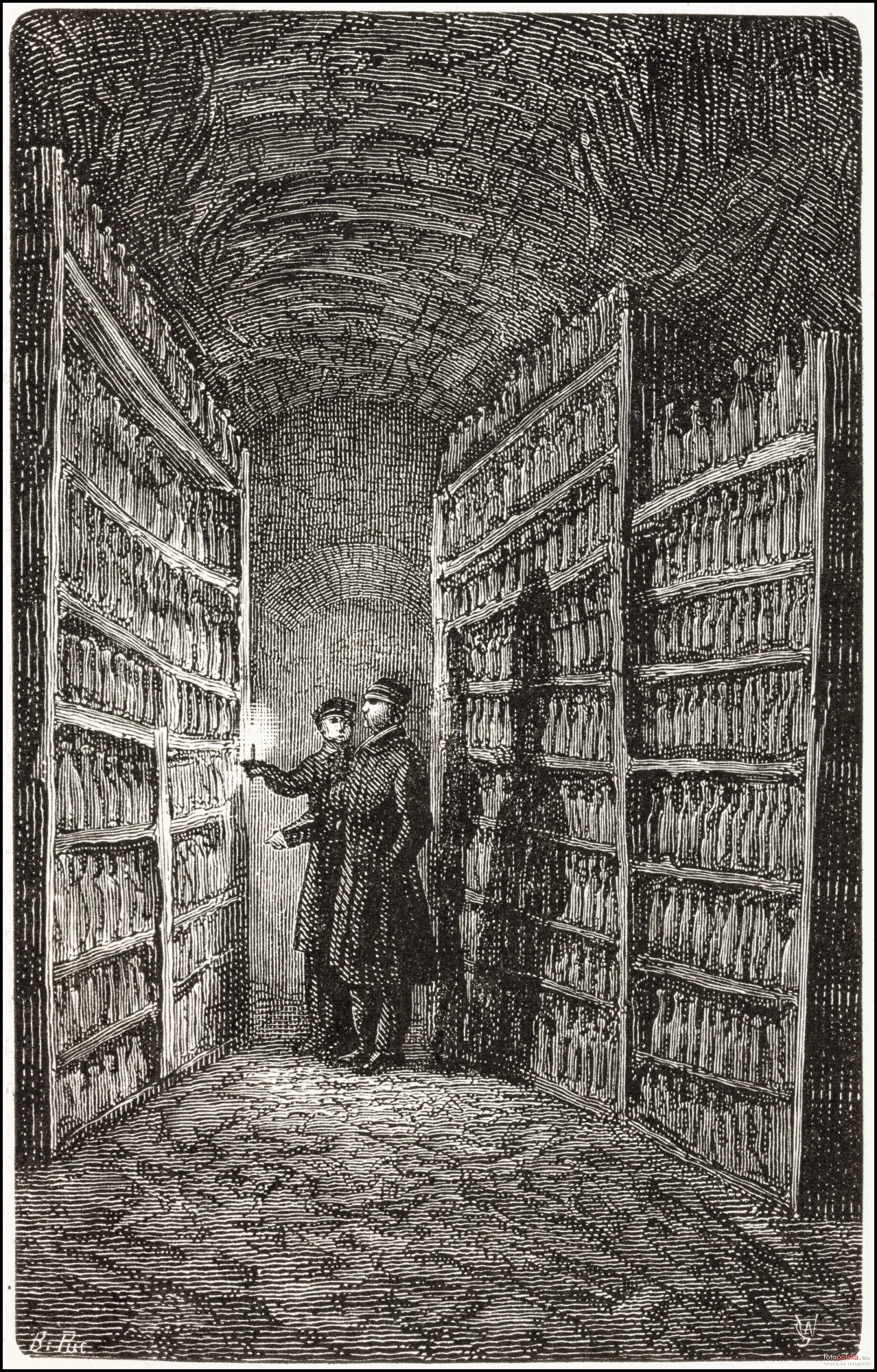
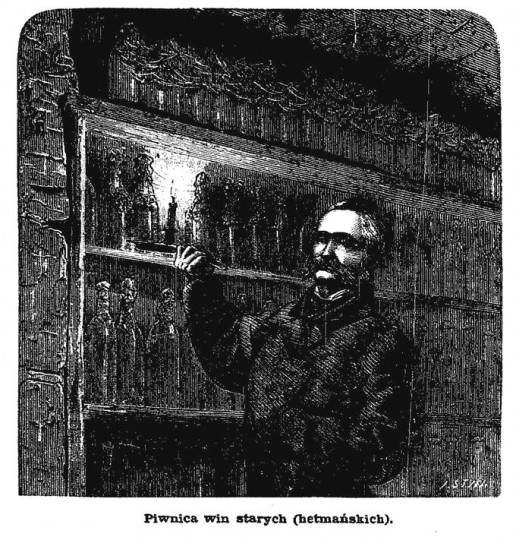
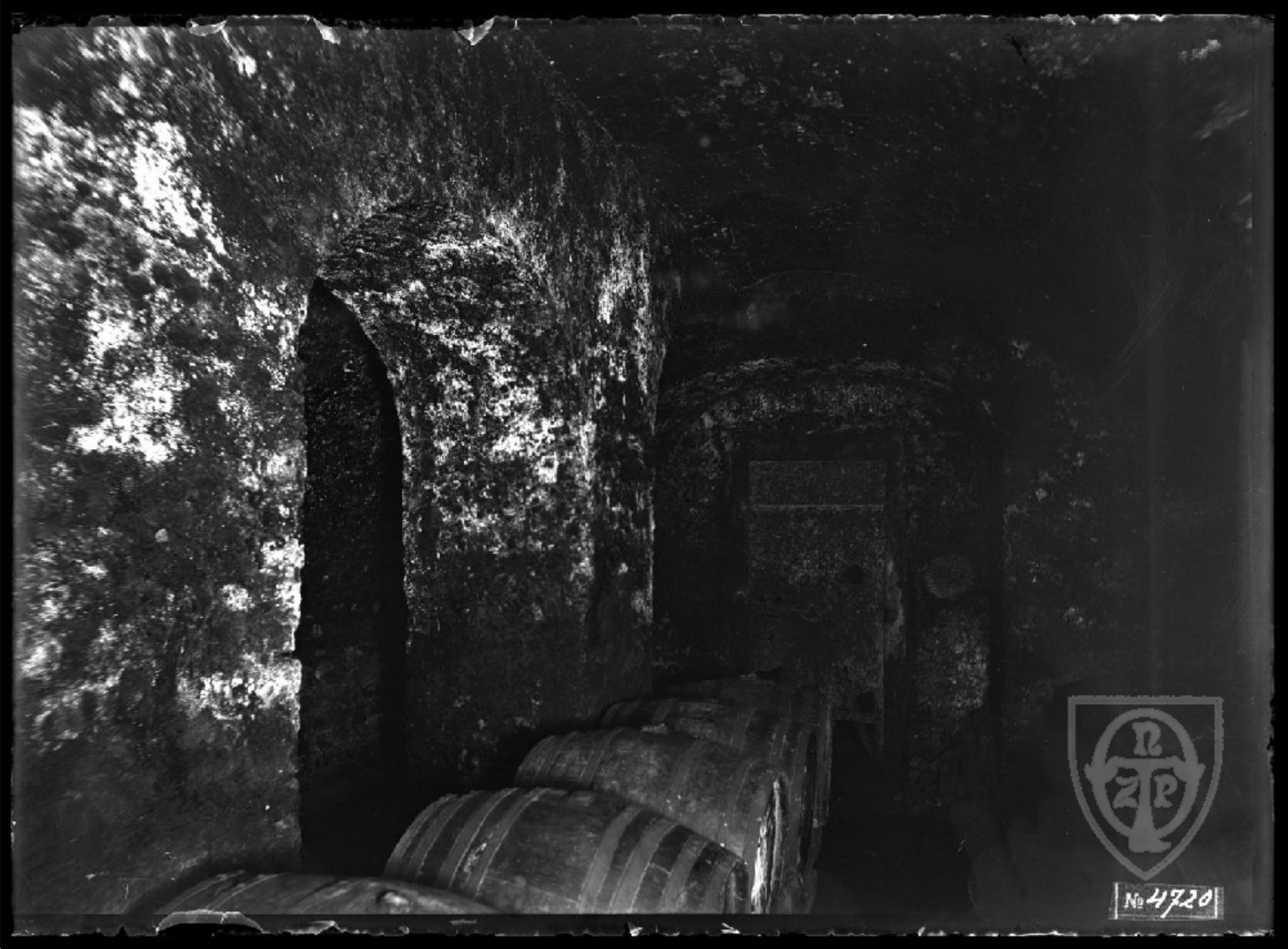
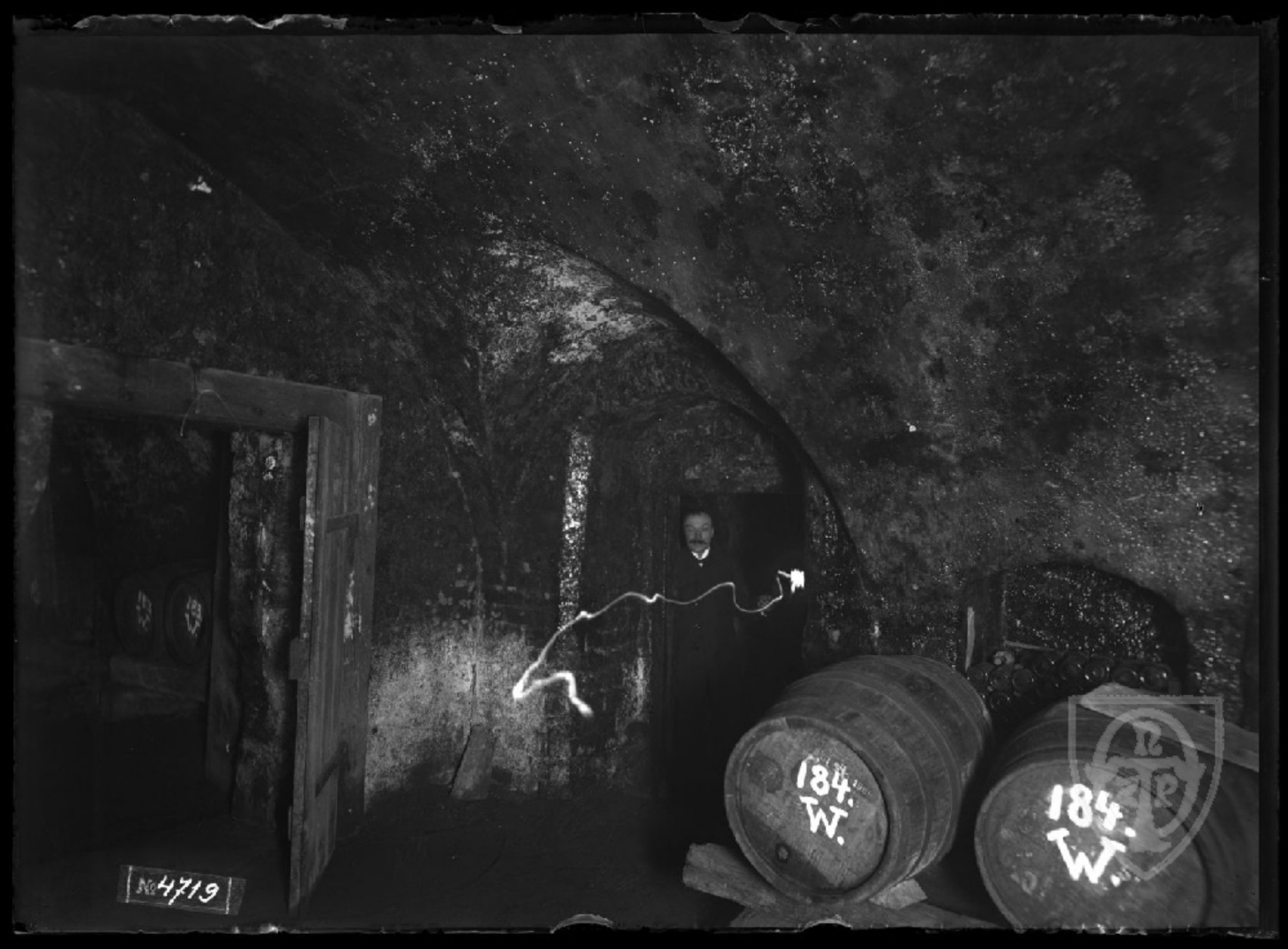
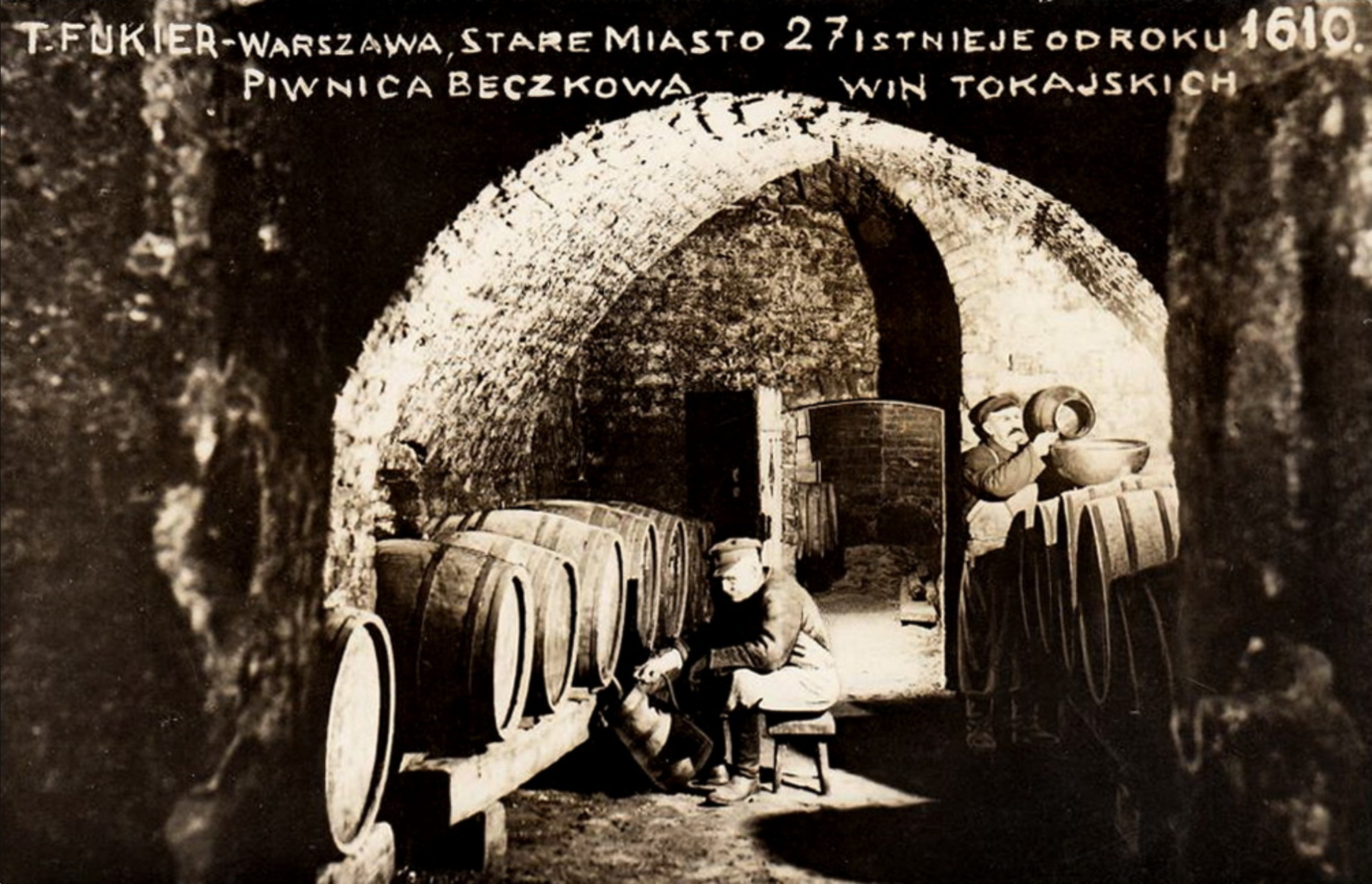
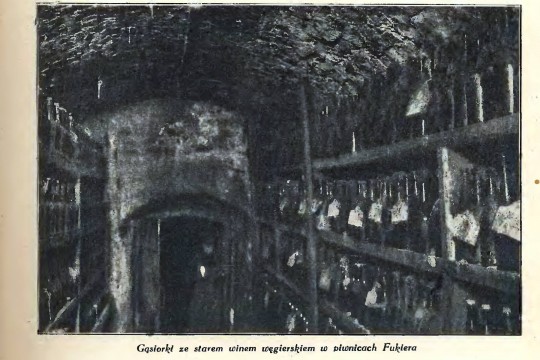
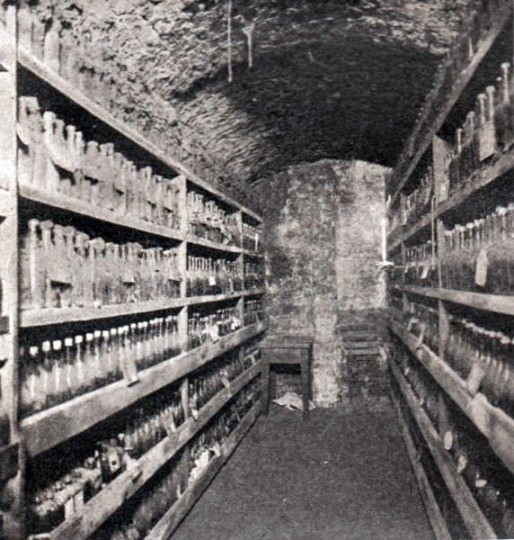
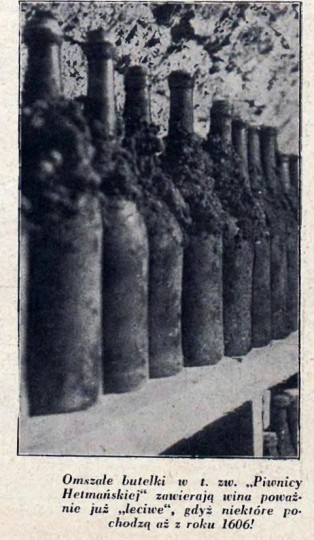
Images of the historic Fukier cellar
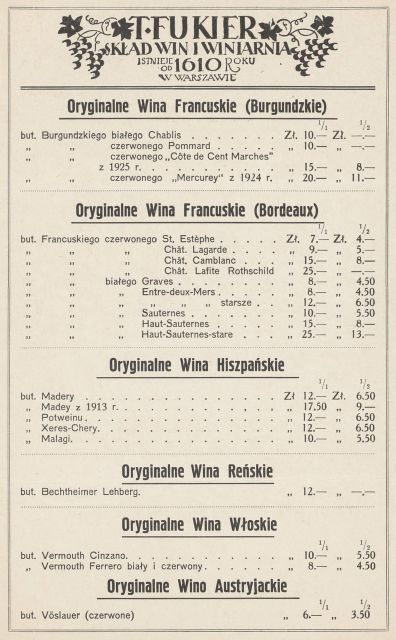
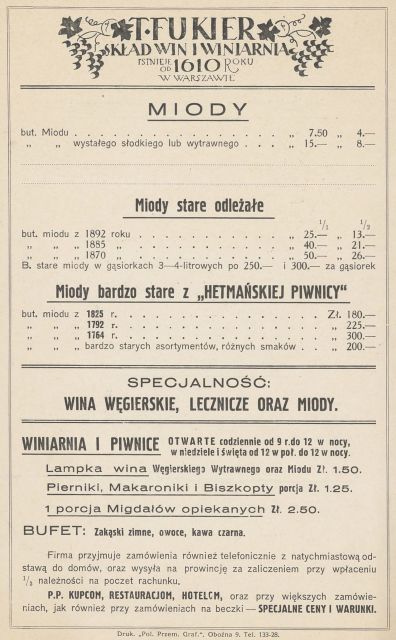
Fukier price lists
Bottle Storage and Identification in the Fukier Cellar
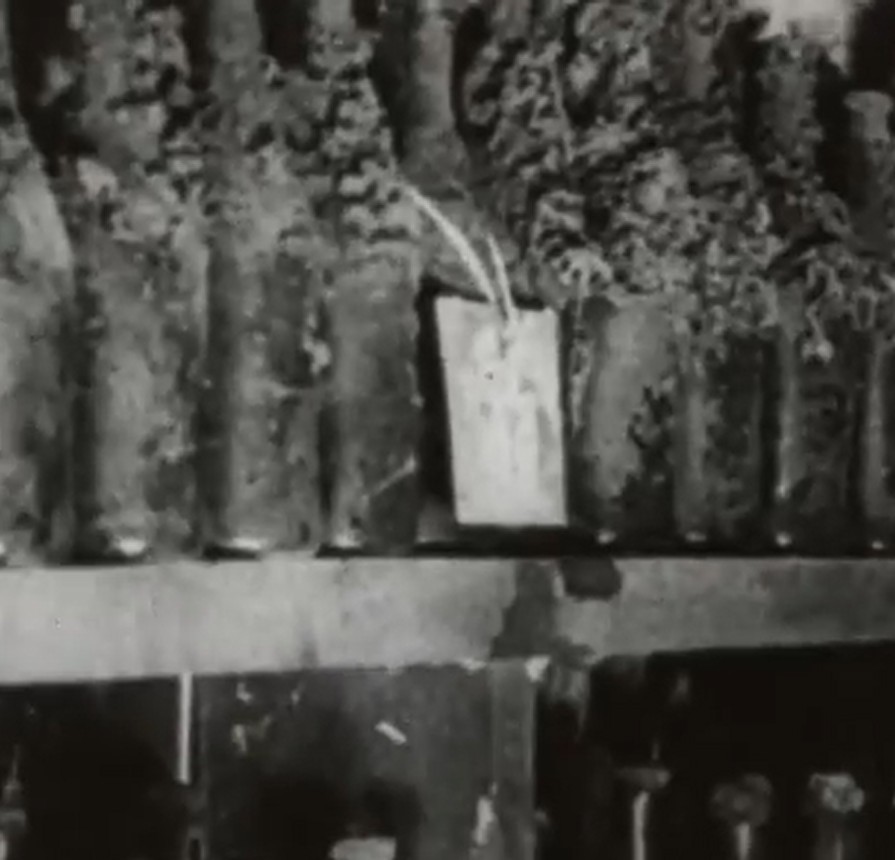
Bottles were kept standing upright as can be seen on the old images and film sequence.
The bottles were marked with different systems of identification:
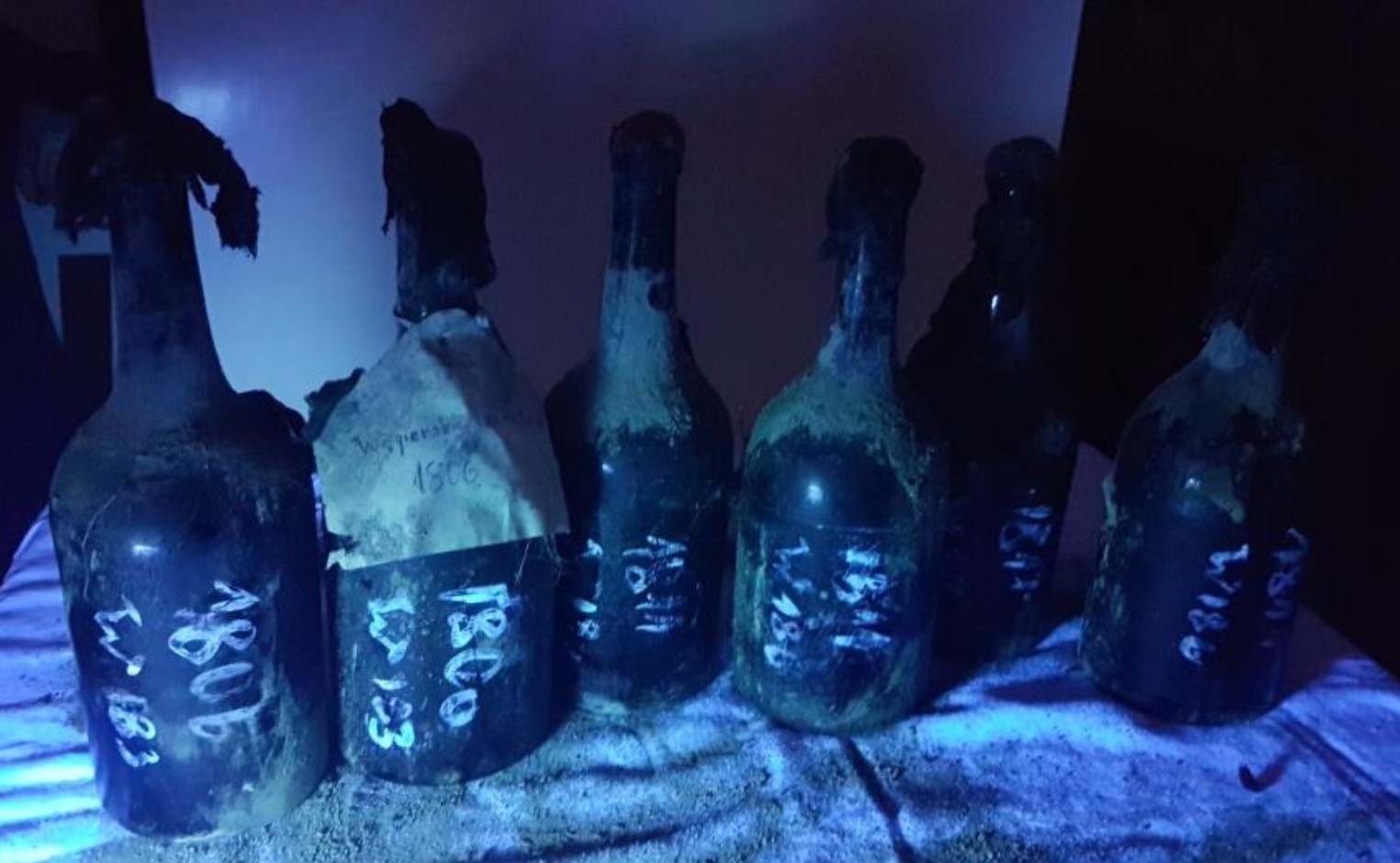
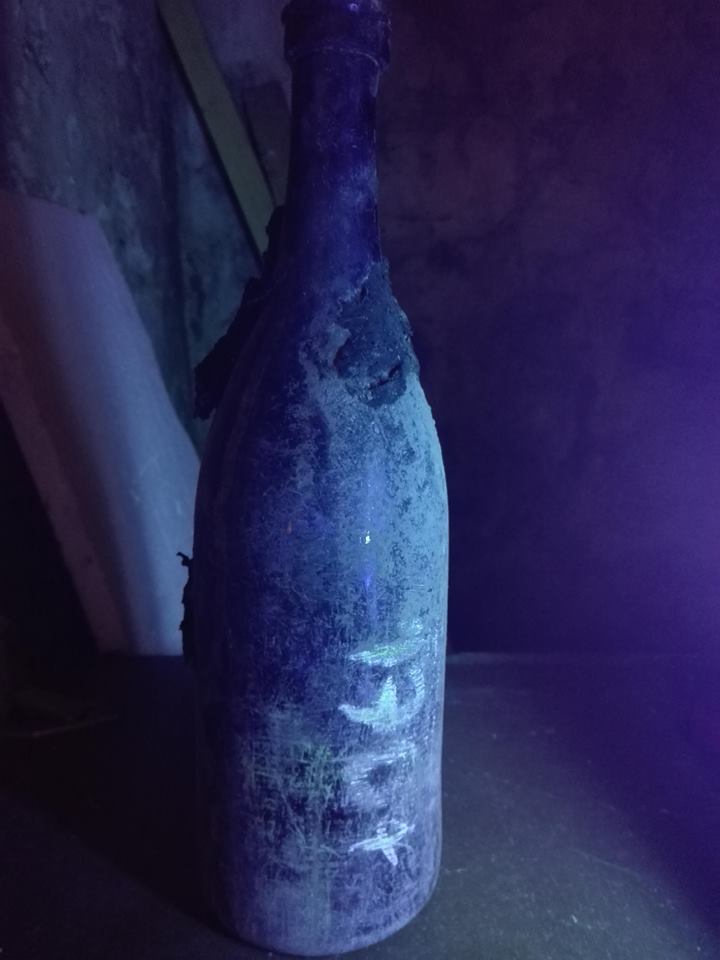
- White-yellowish paint on bottle
- barrel ID (“W + three digit number”)
- vintage year
- type of wine and additional attributes or details, e.g. Imperial, slodki, kapka, ...
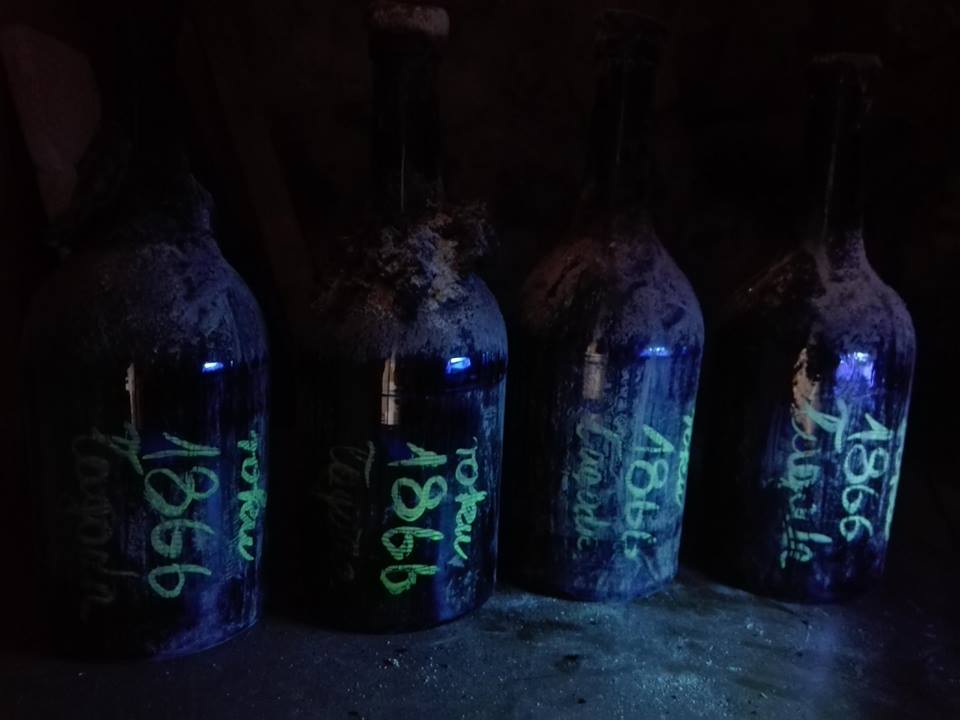
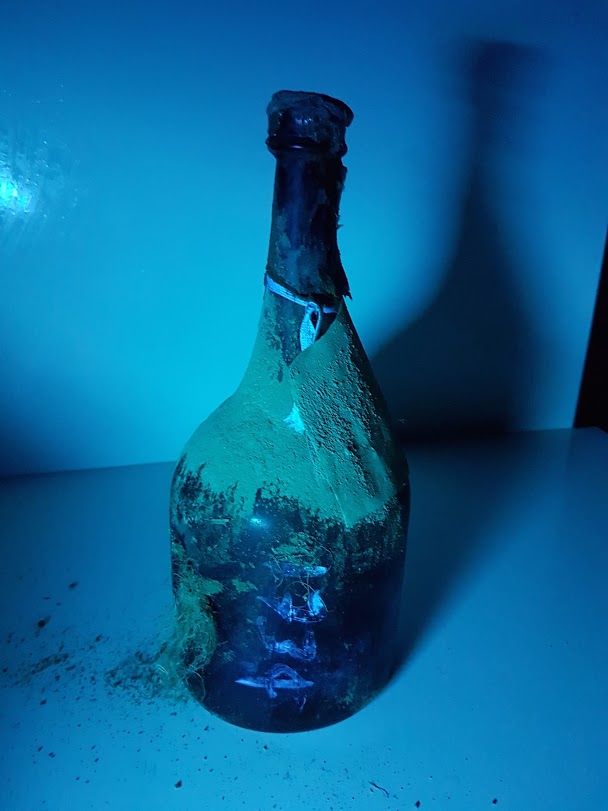
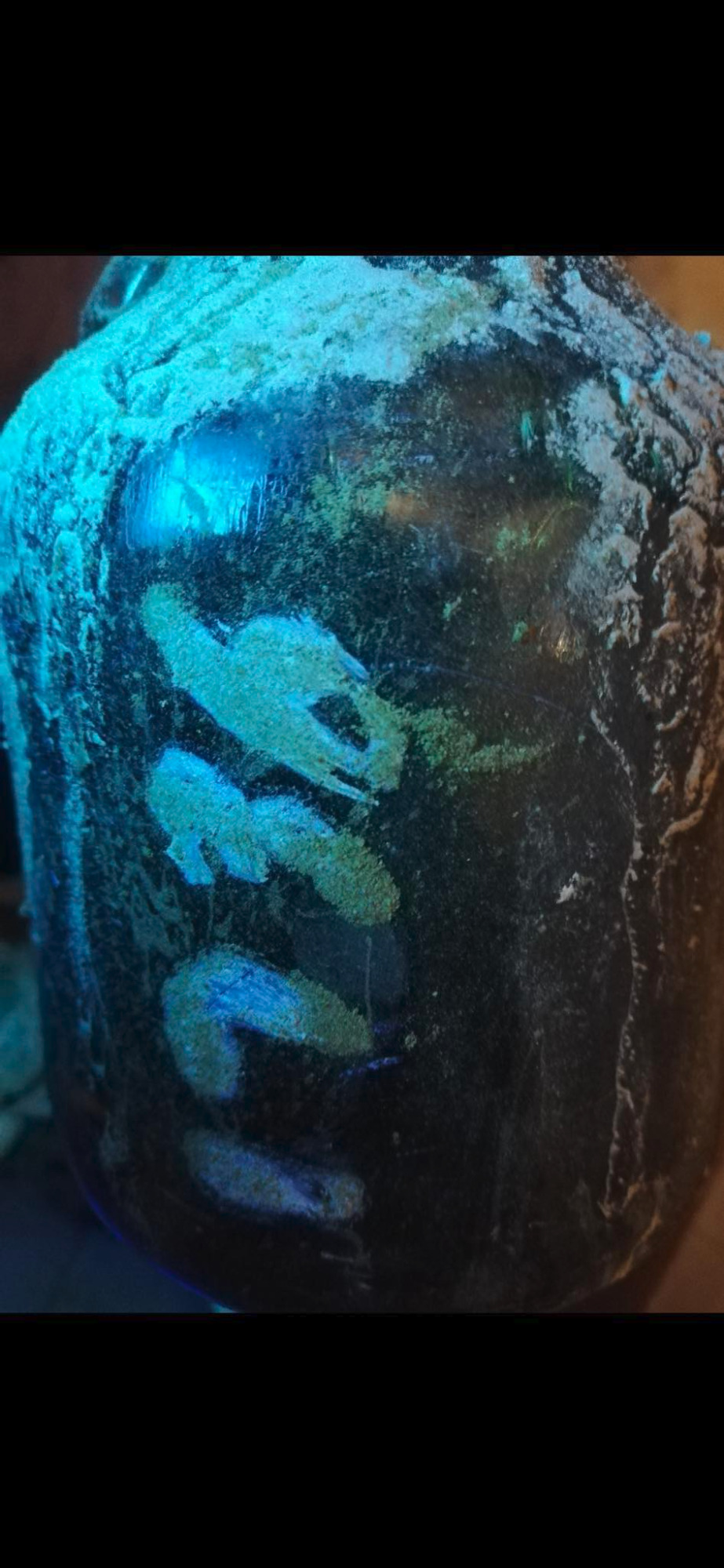
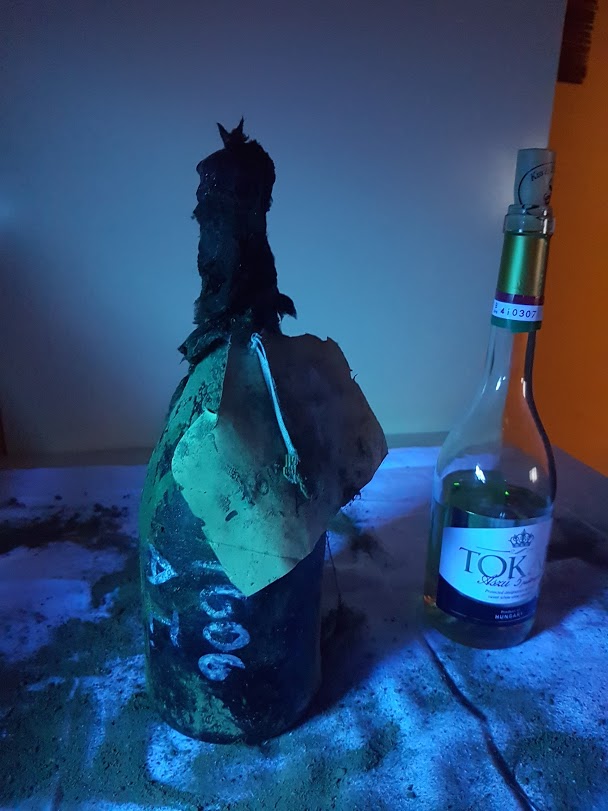
This paint glows under ultraviolet light, a fact mentioned by Daniel Rogov and confirmed by our research. The chemical composition of the Fukier paint has been extensively resesarched and we now know exactly which components of the paint cause the UV glow. This serves as one of the methods to authenticate Fukier bottles. The paint can be seen shortly in the 1933 film.
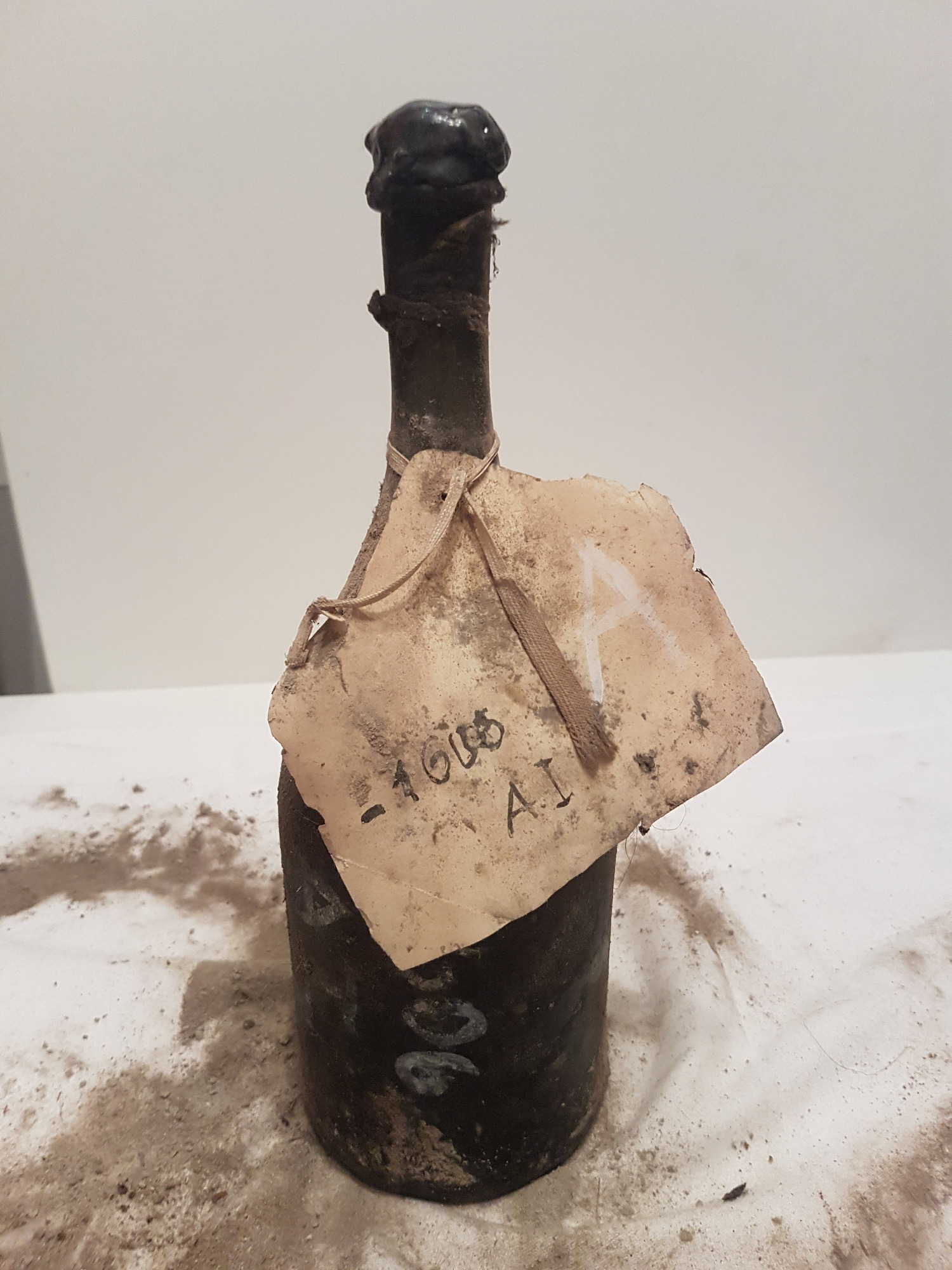
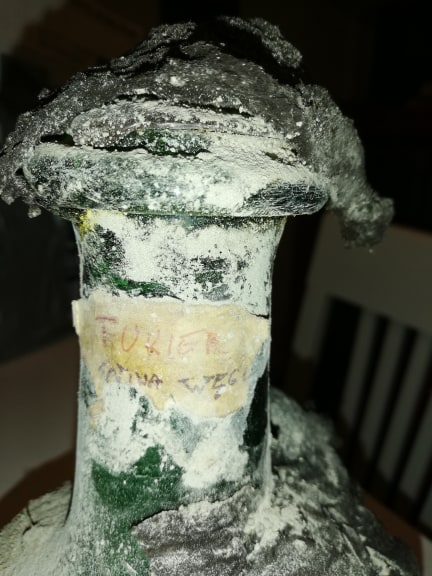
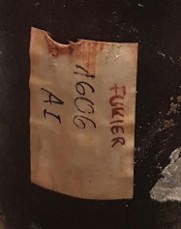
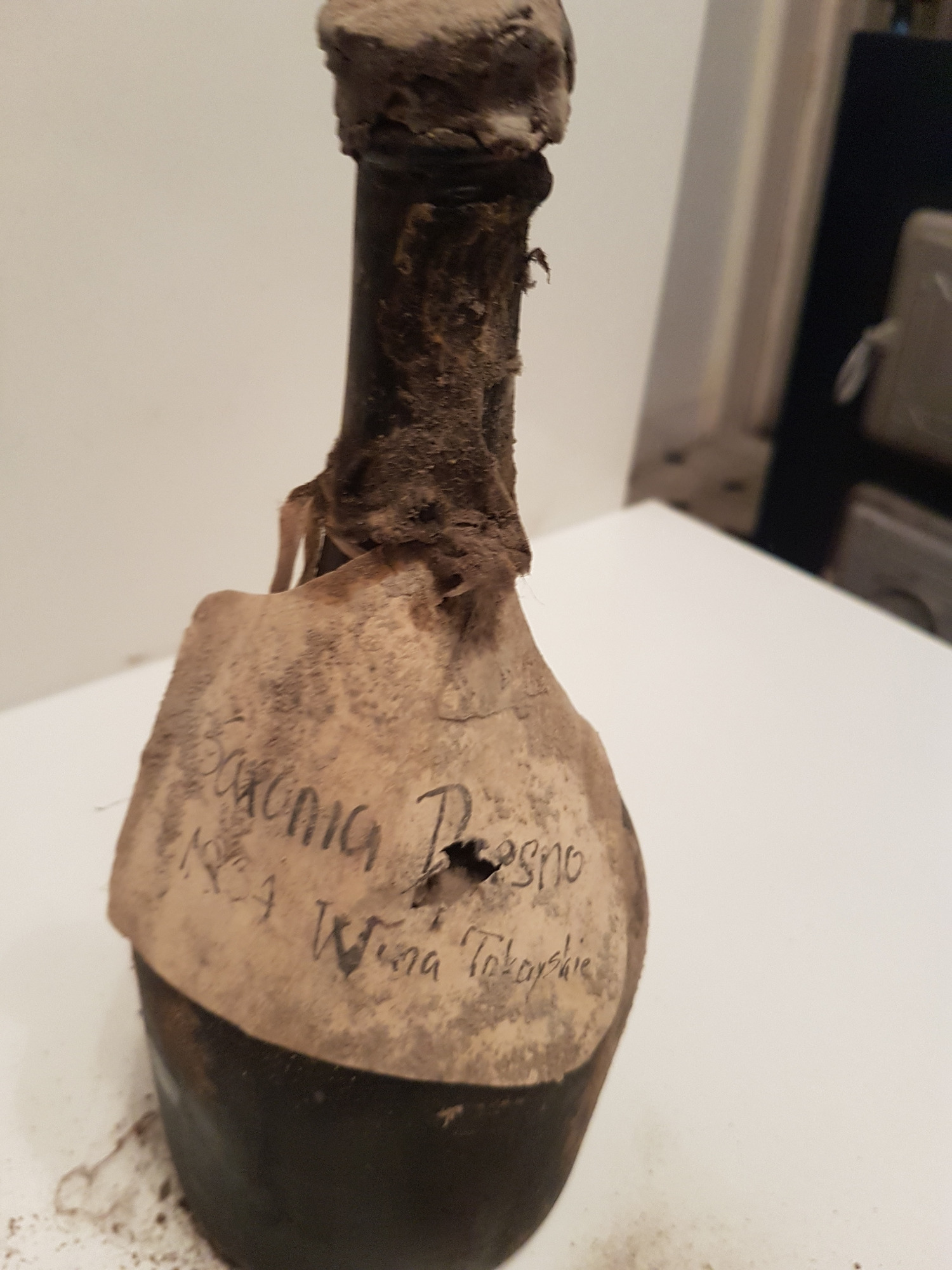
- Hand written paper labels on the bottle or neck containing
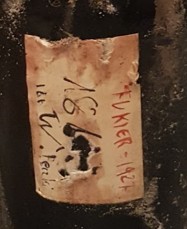
- the name ”Fukier” written in red ink
- vintage year
- type of wine
- cellar inventory number, probably shelve ID such as “A I”
The chemical composition of the inks used has been extensively resesarched and serves as one of the methods to authenticate Fukoietr bottles.
- Special bottles that could easily be identified remained unmarked
Taraciewicz Purchase
Gabriel Kurczewski published the very interesting story of Kordian Tarasiewicz who bought 400 Fukier bottles from the Hetman cellar in 1940 for 28.000 Złoty. The seller was not Edward Krzemiński, the owner of Fukier, because he went bankrupt before, but the tax office. The whole background of this is not clear but the bottles were not confiscated or anything. Mr. Tarasiewicz writzes that "Mr. Fukier sorted and reviewed the entire batch; in some cases, it was necessary to replace the corks. He proceeded with this operation with great excitement, recalling individual vintages. Each type was given the correct label and description. Several bottles dated back to the time of Jan Sobieski!" Jan Sobieski (1629 - 1696) was King of Poland and famous for his victory at thhe battle of Vienna in 1683.
Mr. Tarasiewicz explains that ther wines were walled-in in two cellars before the Warsaw Uprising in 1944. 100 of those bottles could be saved, the rest was broken. Mr. Tarasiewicz later told Gabriel Kurczewski that all bottles were consumed. However, I know of a few bottles labeled with "Tarasiewicz" and I am in the process of identifying them as original Fukier bottles. It is ongoing research, so please check this page in a few month.
Confiscation in World War II
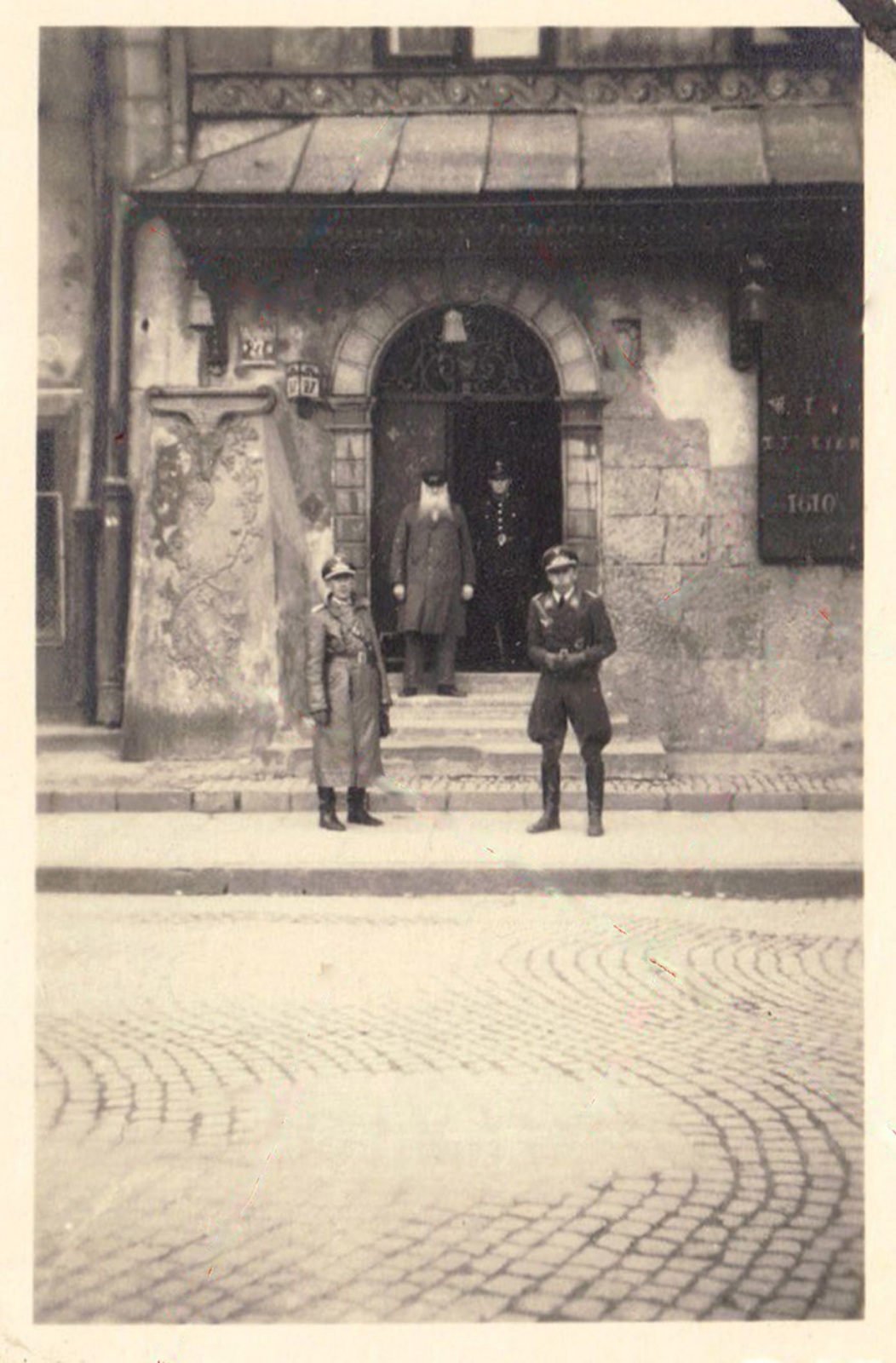
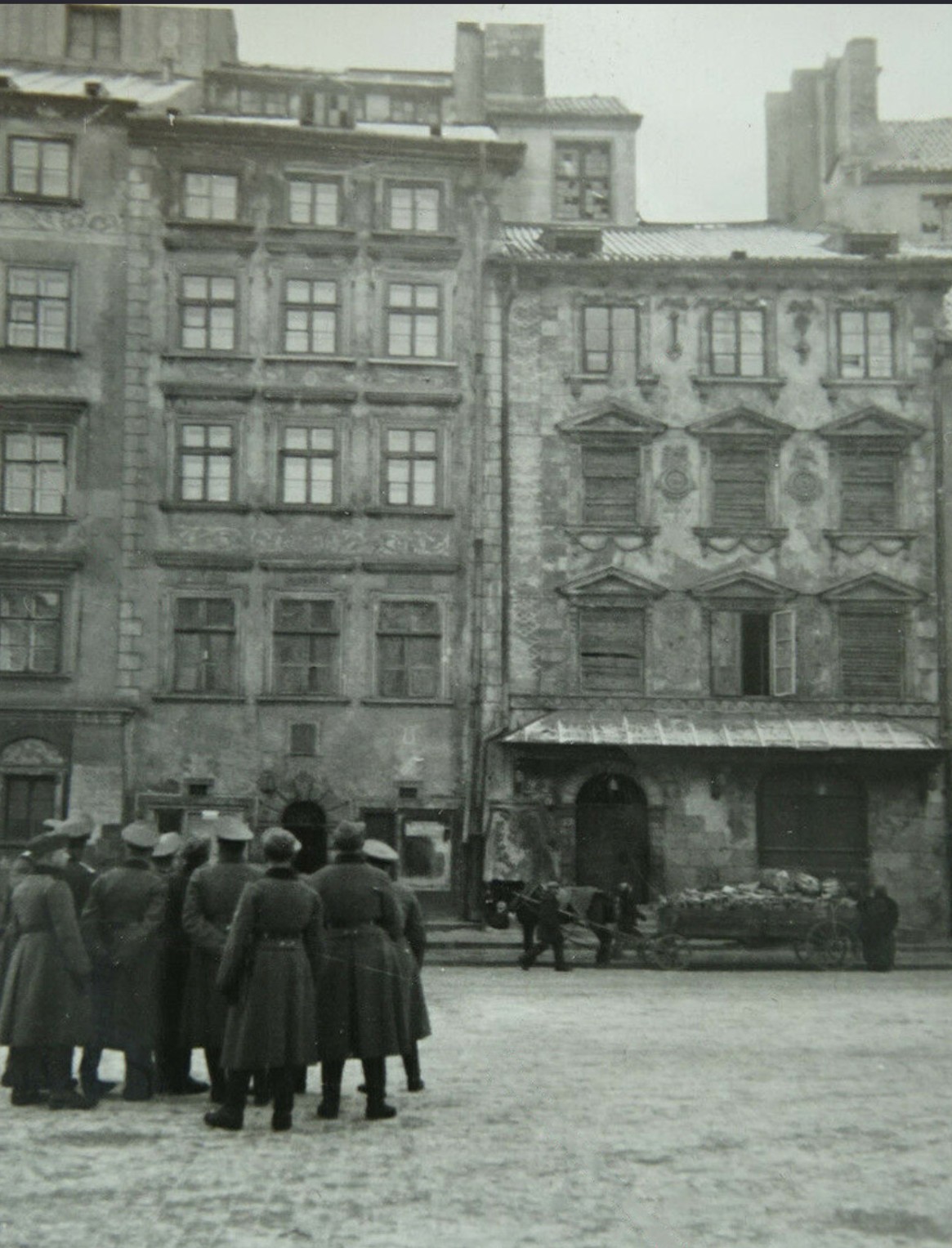
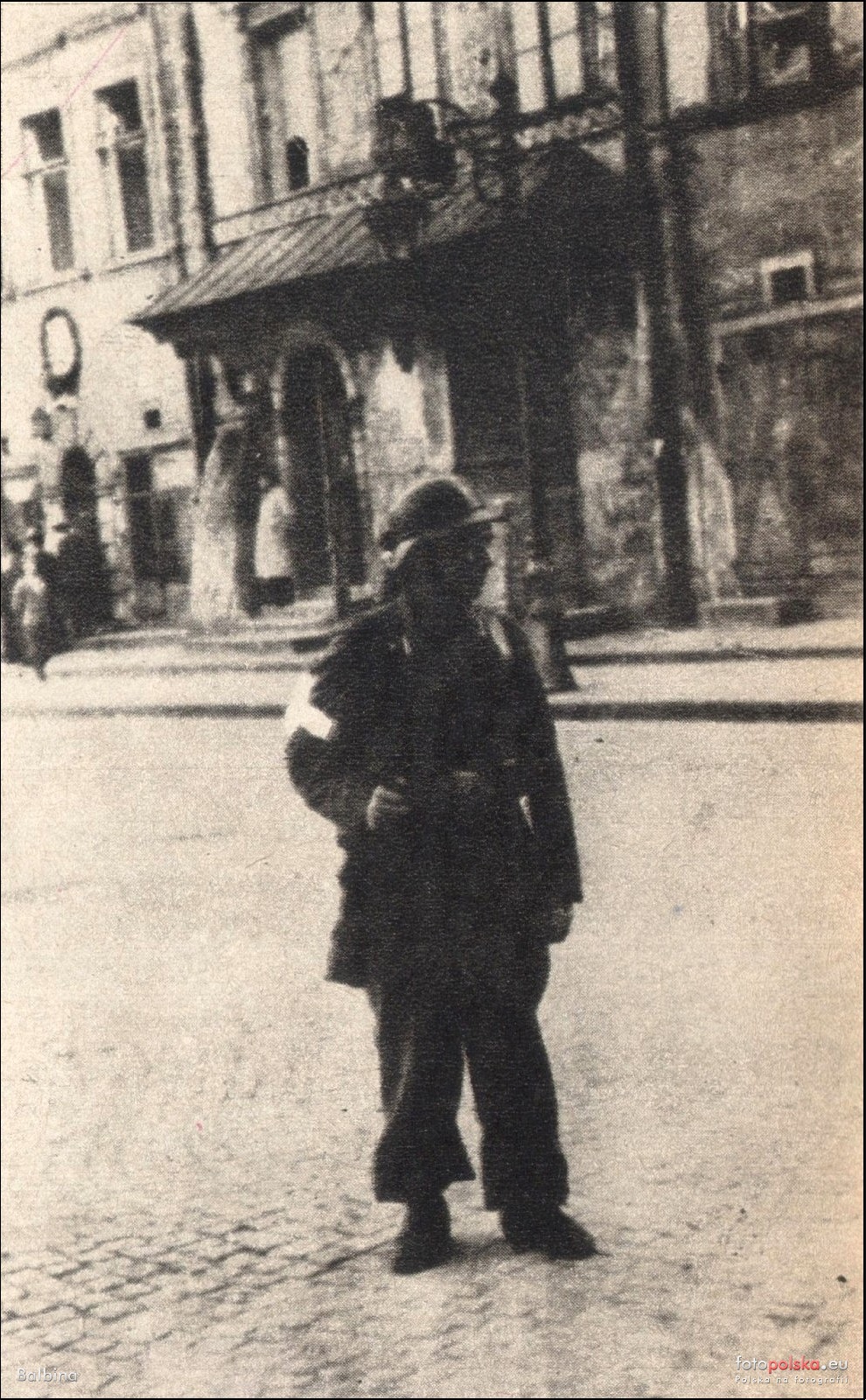
The joint attack of Germany and Soviet Union on Poland on 1 September 1939 marked the outbreak of World War II. On September 28 Warsaw surrendered, the German victory parade was held in Warsaw on October 5th, Hitler attending. According to Henryk Maria Fukier, the very next day German troops started confiscating the Fukier wines which took 3 days. The timing of the confiscation suggests the importance of the operation. Until now, no military document or research finding could shed light on the chain of command. The confiscation operation seemed to be independent of the Führermuseum and Sonderauftrag Linz.
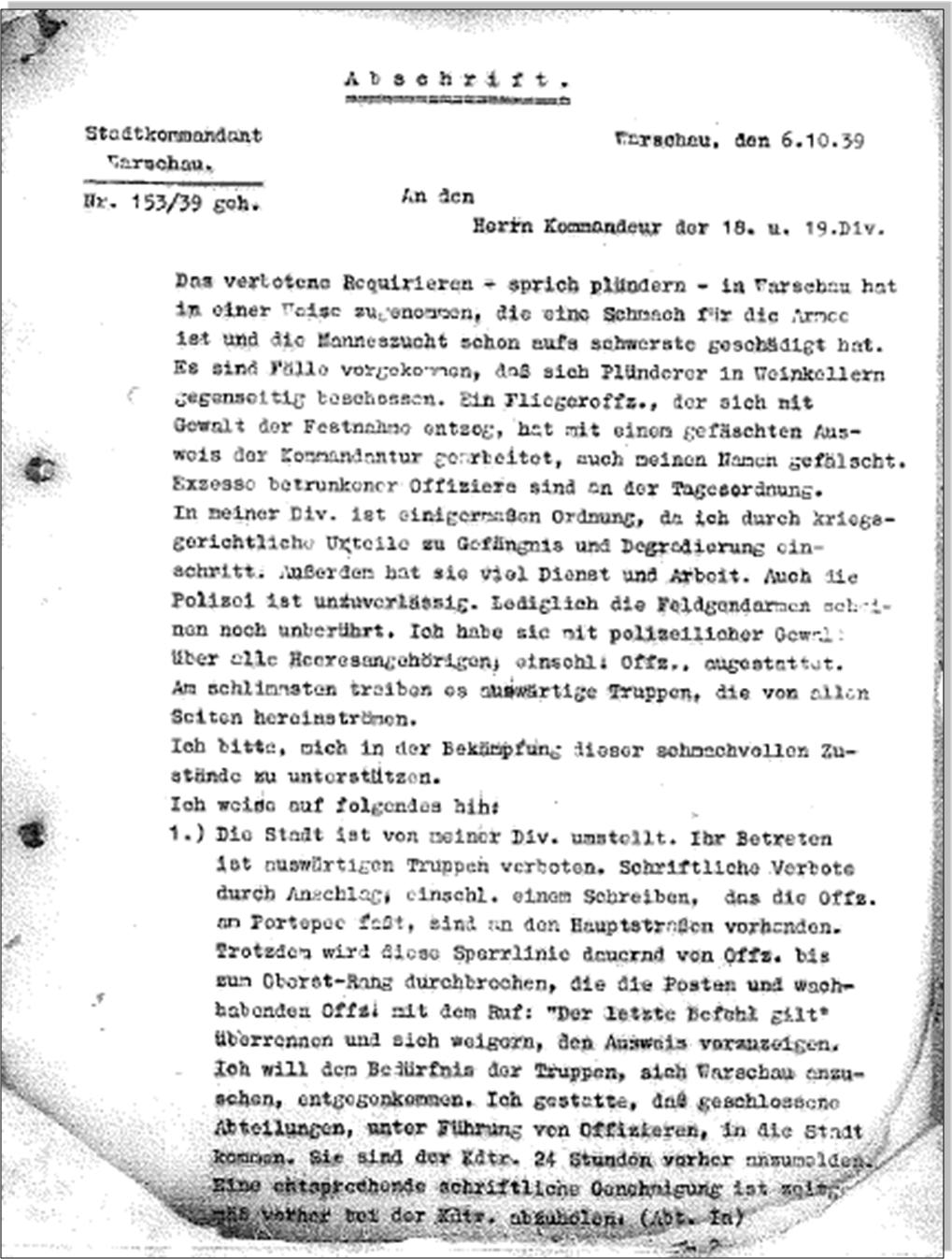
An interesting source is the daily order of Lieutenant General Conrad von Cochenhausen from October 6, 1939 to the commanders of the 18. and 19. Infantry Division. Cochenhausen was head of the 10th Infantry Division (part of 8th Army) and commanding officer of Warsaw. He complains about looting and pillaging of German troops. He even mentions a case where German troops were shooting at each other in the city's wine cellars.
In my research in numerous archives I came across a Wehrmacht document dated October 7, 1939 that is dircetly linked to the Fukier cellar. It lists app. 1,000 Tokaji bottles of different vintages (1606, 1624, 1648, 1652, 1668, 1734, 1754, 1783 and 1788) as well as 650 bottles of other wines (Bordeaux, Burgundy, Sherry, Madeira, ...).
Since those days in early October 1939 all the Fukier wines are believed to have been lost or destroyed since not a single bottle was known until the first rediscovery in 2017.
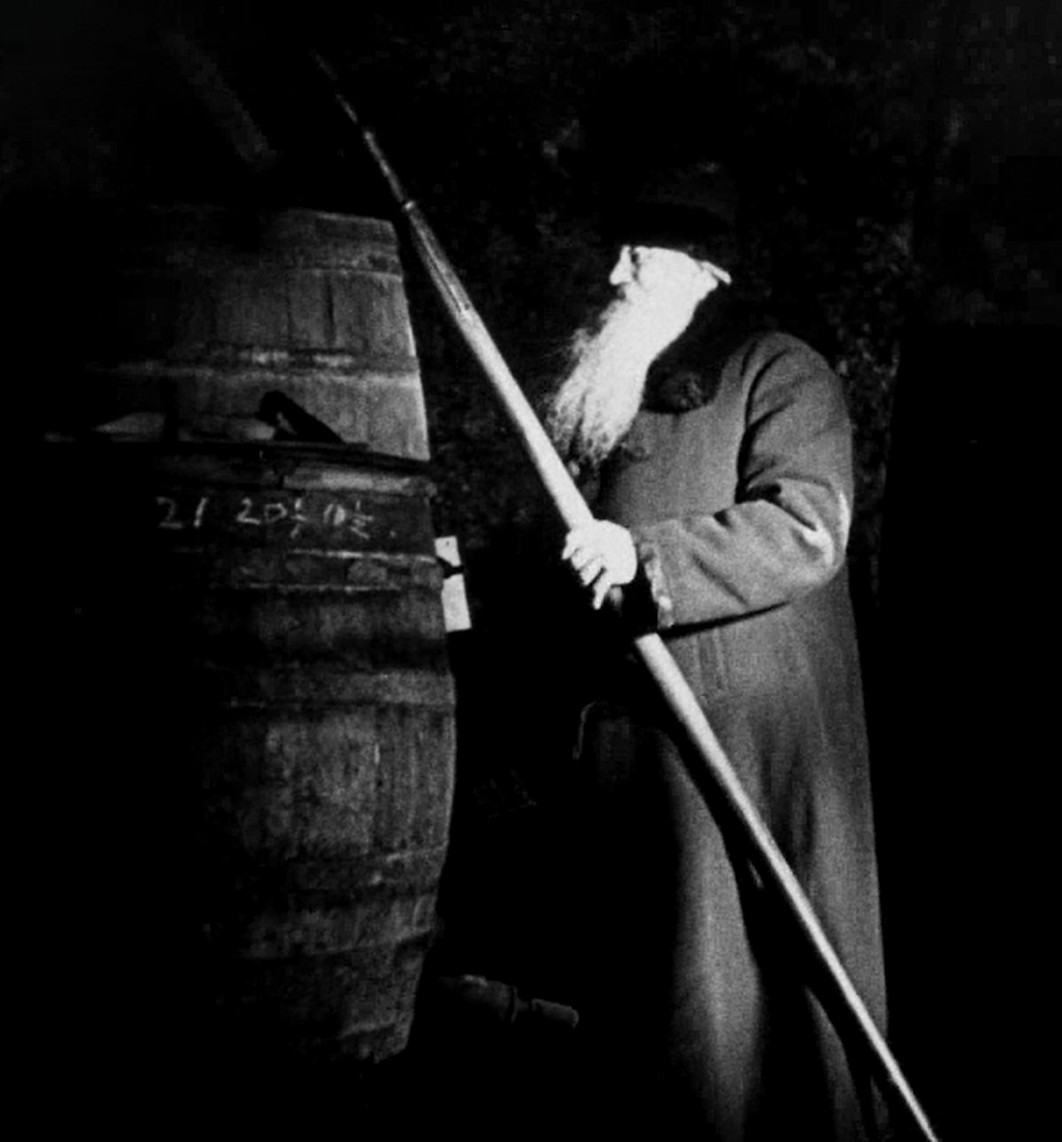
Fukier during Word War II
Rediscovery
As explained above there was mounting evidence that (Tokaji) bottles of the Fukier cellar had survived the World War II.
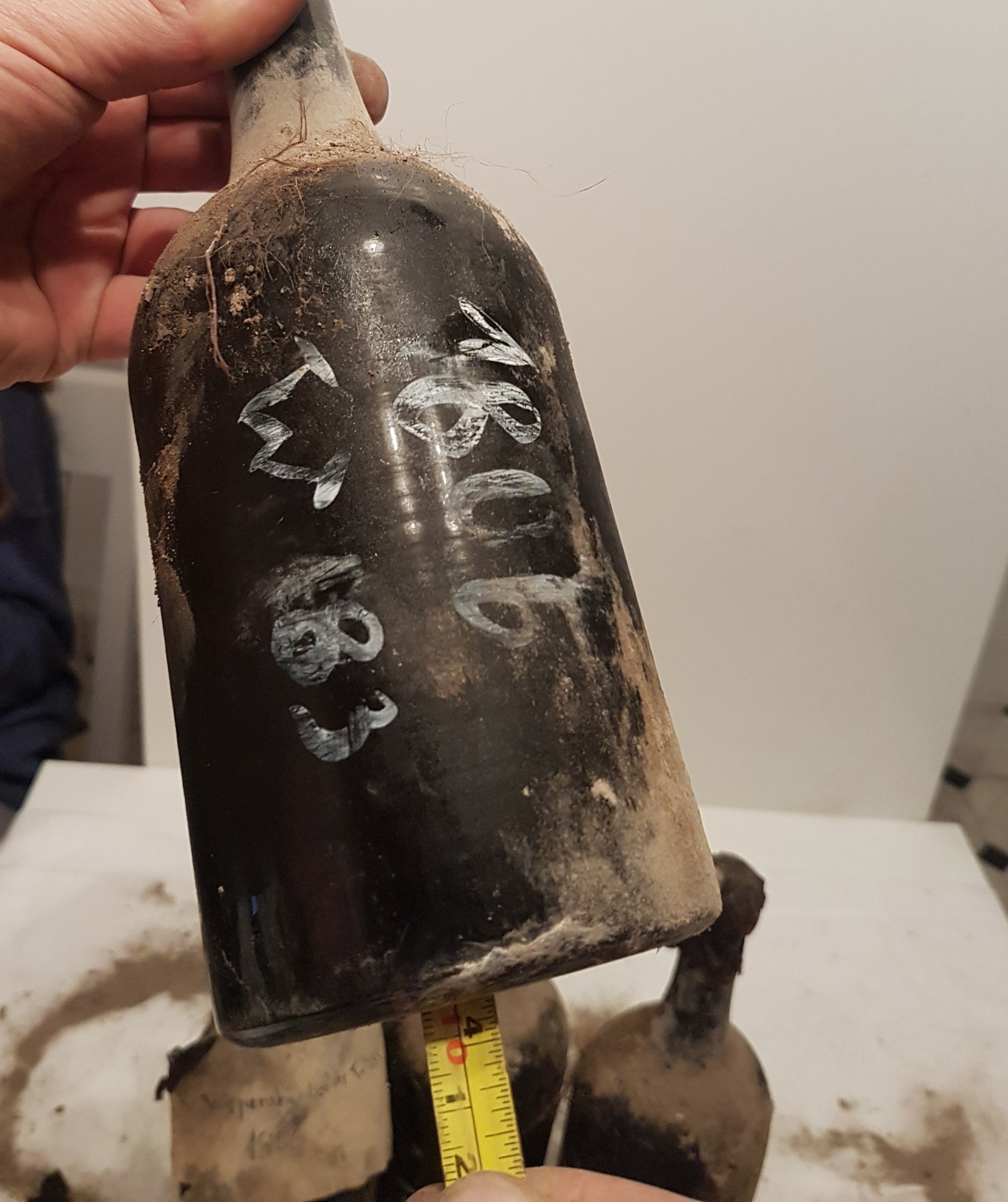
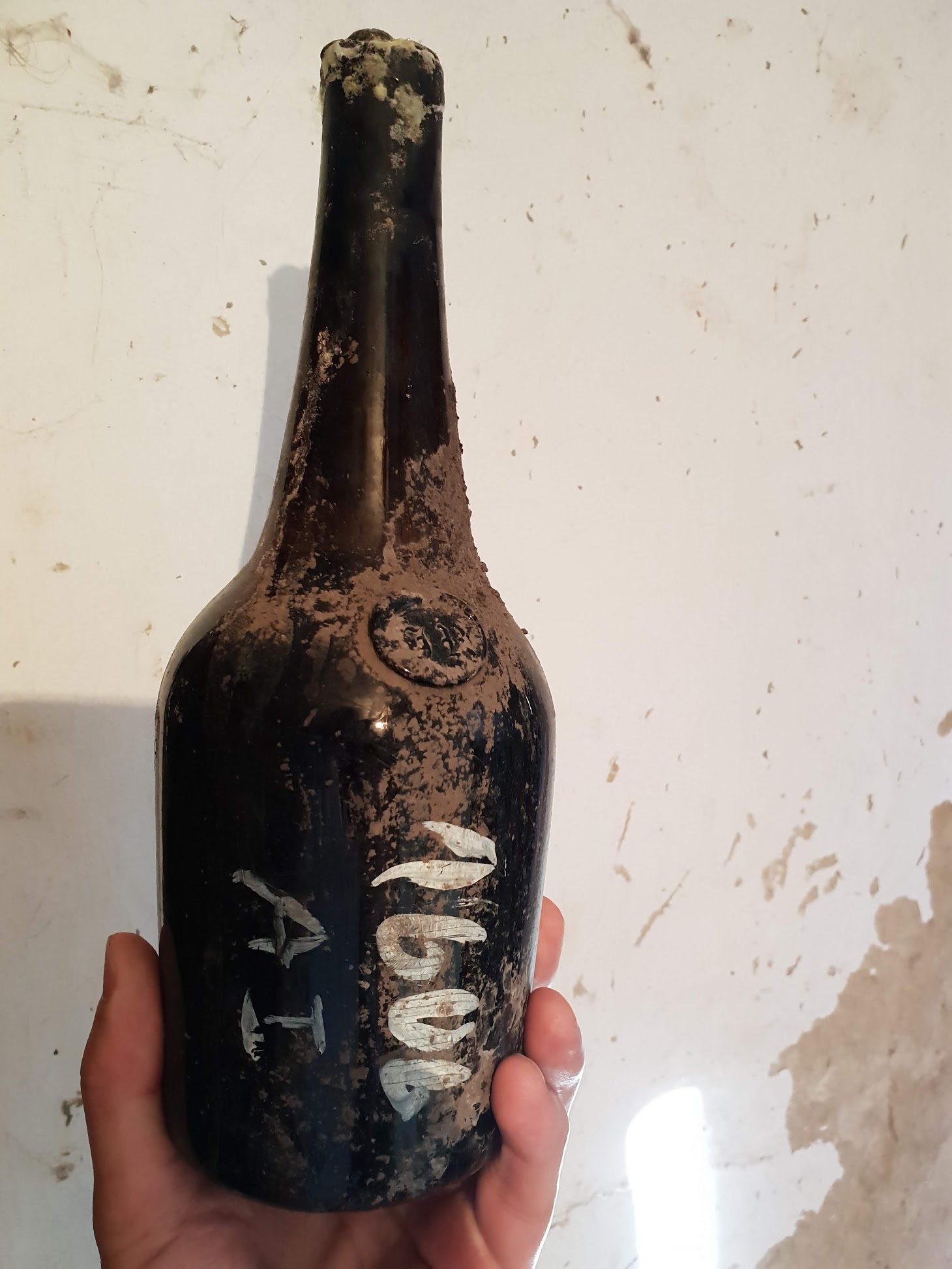
The first proof of evidence for authentic Fukier bottles was found walled-in in a cellar in Hungary along with the original pre-war Fukier invoices and postcards from the 1930-ies. Until today, several other discoveries of Fukier bottles have been made, in walled-in sections of private cellars, completely forgotten private cellars as well as in private collections. All discoveries are totally unrelated of each other in terms of documentation, ownership history and location (place, region and even country). The bottles (glass, seals, labels, paint, ink) and documents were analyzed in great detail, and it was this scientific analysis, especially the paint on the bottle and the ink on the labels that has confirmed the Fukier origin as the paint/ink composition was chemically exactly the same. Also, a few more Fukier artefacts have surfaced, most notably a serving tray.
Until now, in total more than 50 bottles have been sussessfully authenticated as of Fukier origin, 2 non-tokaji, one Ausbruch from Rust (Austria) of vintage 1682 and one bottle of mead, vintage 1825. Several more bottles are in currently the process of authentication.
Images of verified Fukier bottles (all rediscovered since 2017). All have the vintage year, and sometimes shelf ID or barrel ID.
The Future
I expect many more Fukier bottles and artefacts to surface as such precious wines were probably kept well guarded by their owners and were basically never opened. If the Zhukov tasting described by Daniel Rogov really took place we can hope for suprising discoveries of bottles, photographs and artefacts (cellar book?) in Russia or territories that belonged to the Soviet Union.
In Massandra on the Crimean pensionsula, unfortunately no Fukier Tokaji was found so far.
If you own or know of any very old (Tokaji) bottle and would like to check it for Fukier origin please don't hesitate to contact me.
Fukier legends
Their extraordinary wine collection made the Fukier house a perfect source for legends. Here are some that, was far as I know, ar all unsupported by any evidence until today:
- Napoleon as visitor had signed the guest book (Source: claim by Edward Krzemiński found in the 1934 article from János Bókay. Napoleon indeed spent quite some time in Poland. Henryk Maria Fukier wrote that the original guest books were destroyed in his appartment in 1944.)
- Re-fermentation in the Tokaji barrels in the Fukier cellar started every year at the same time (or even day) the grapevine blossom started in Tokaji. (Source: claim by Edward Krzemiński found in the 1934 article from János Bókay.)
- Secret liquid to soak corks before recorking. A Fukier trade secret that allowed to protect the wine quality for hundreds of years, and was given a reason why only the Fukier house offered such old wines. (Source: claim by Edward Krzemiński found in the 1934 article from János Bókay.)
- A norwegian newspaper article about the Fukier cellar from 1920 claims that "the jewel in this precious collection is approximately eight bottles of Tokay from 1575. Originally, the color was like light sherry, but now it looks like thick syrup. People who have been fortunate enough to taste this divine drink say that one becomes almost unconscious from its wonderful aroma."